
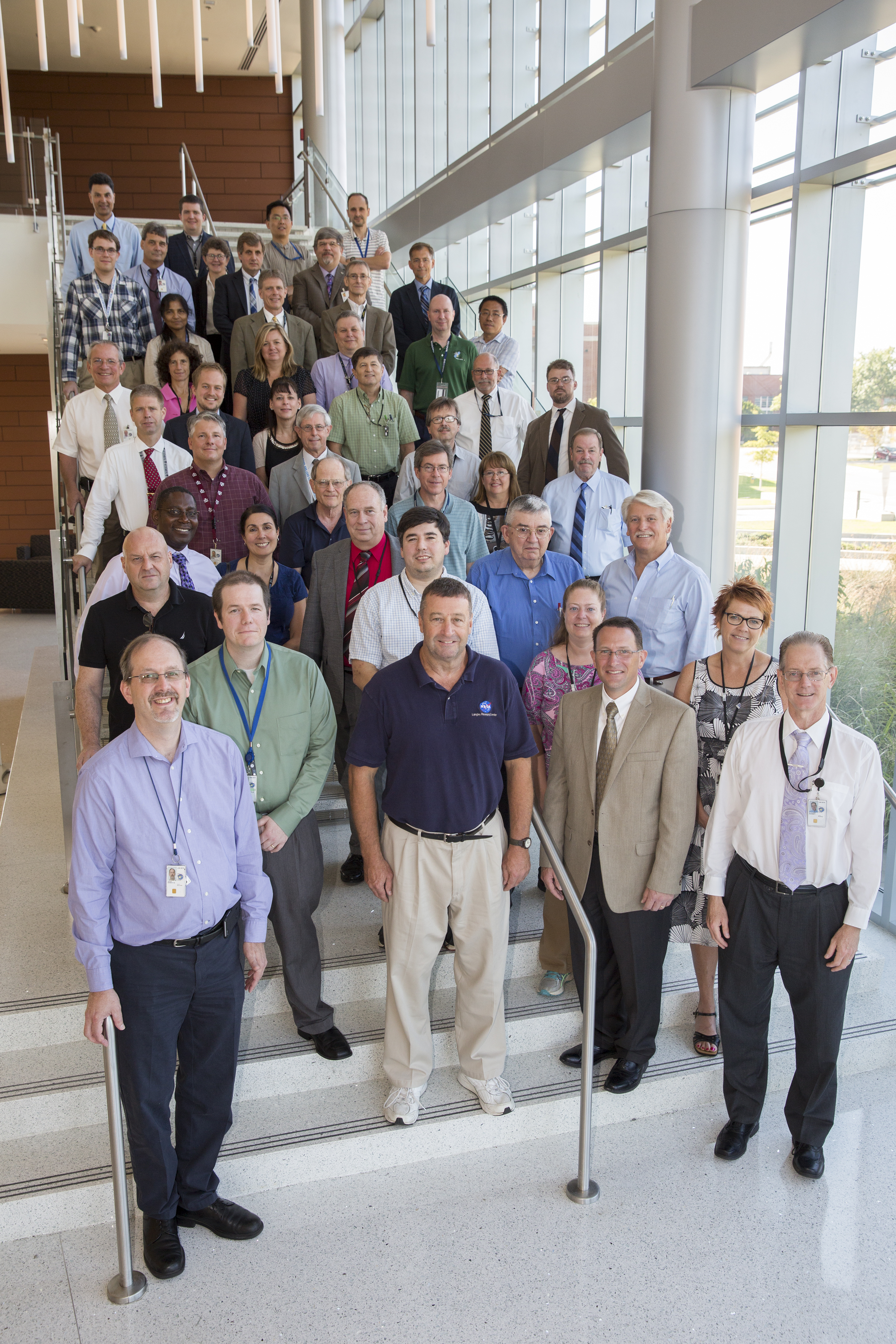
The NASA Headquarters Earth Science Division gave approval to NASA Langley Research Center to formally begin CPF. The approval states that CPF will include a Reflected Solar Spectrometer likely to be built by the Laboratory for Atmospheric and Space Physics (LASP) in Boulder, Colorado.
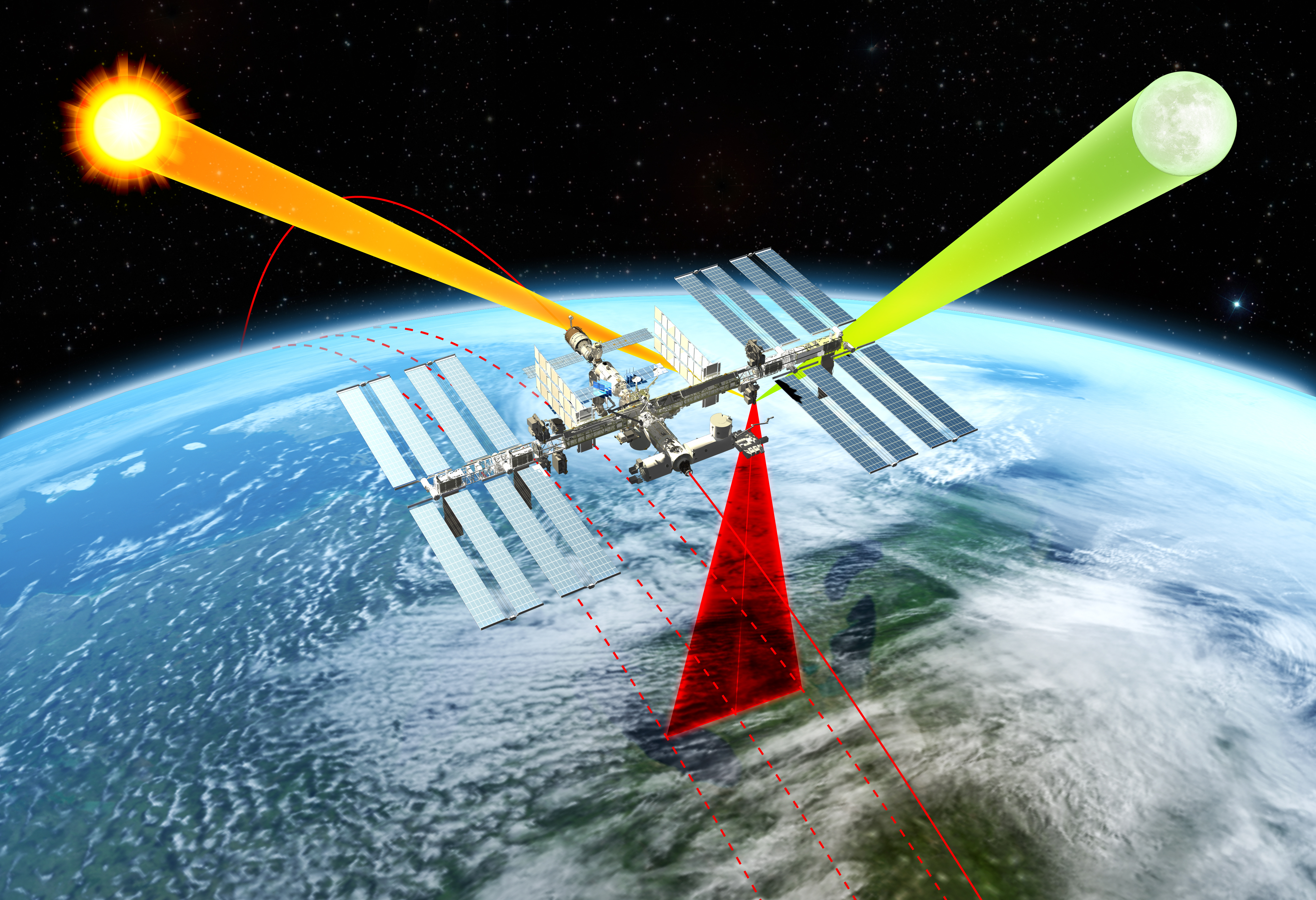
During this phase, the mission investigates alternatives for initial mission concepts, architectures, potential launch vehicles, and concepts of operations. These alternatives are evaluated to determine the most feasible mission concepts that would enable mission success.
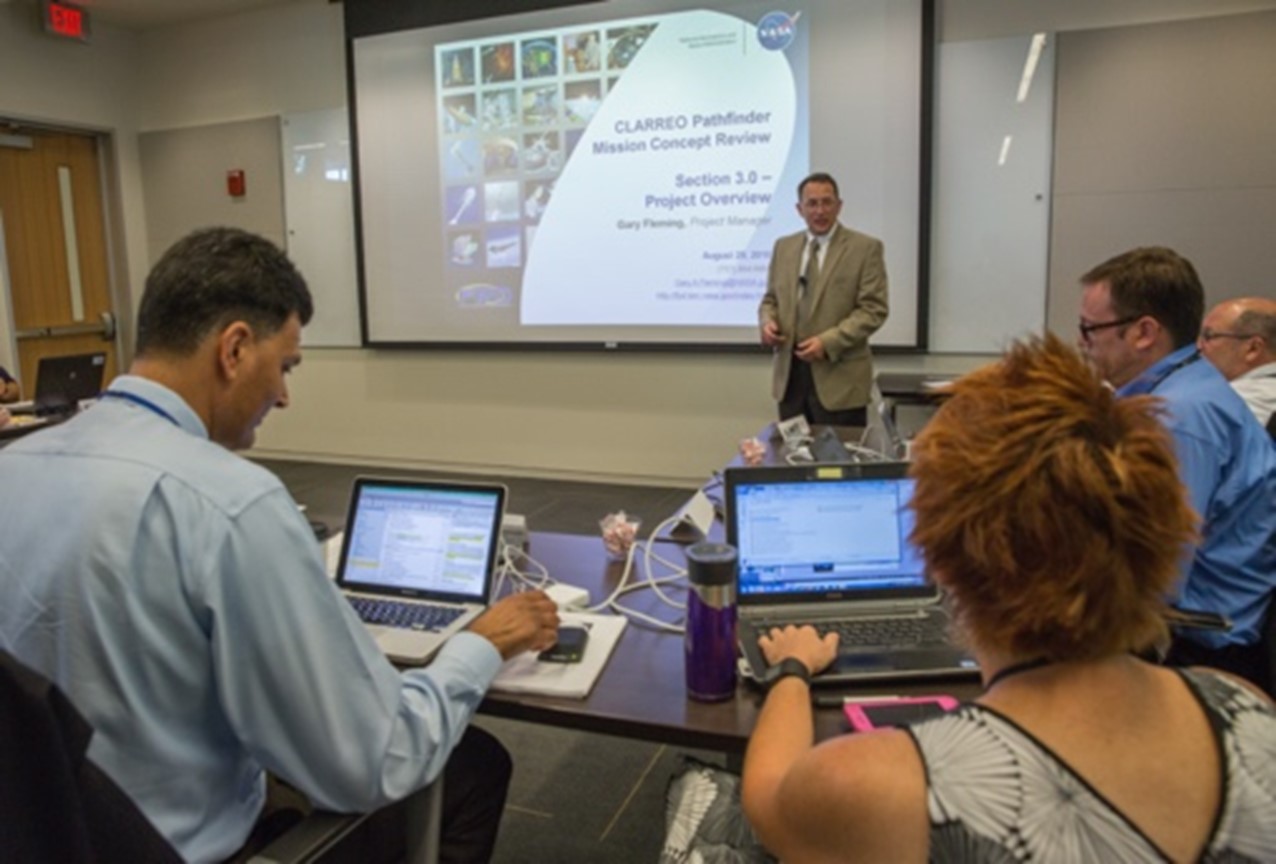
A review panel evaluates whether the mission demonstrates that it addresses critical NASA objectives and that project planning is mature enough to proceed to the next phase at the Mission Concept Review (MCR).
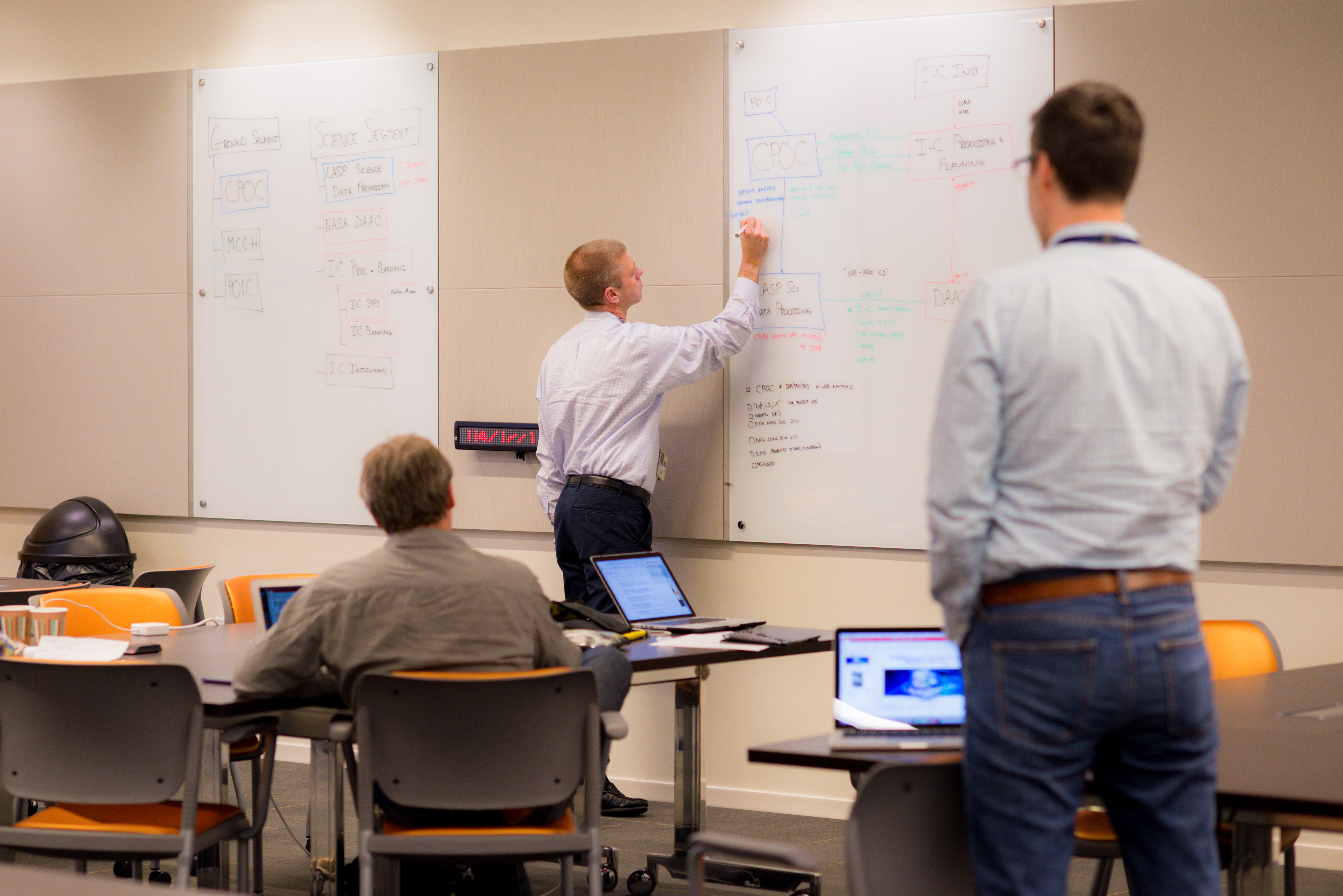
After approval to proceed to Phase A, the project further advances mission and operational concepts and establishes an initial project plan. It also refines its requirements and continues to assess technology maturity and the need for additional technology development.
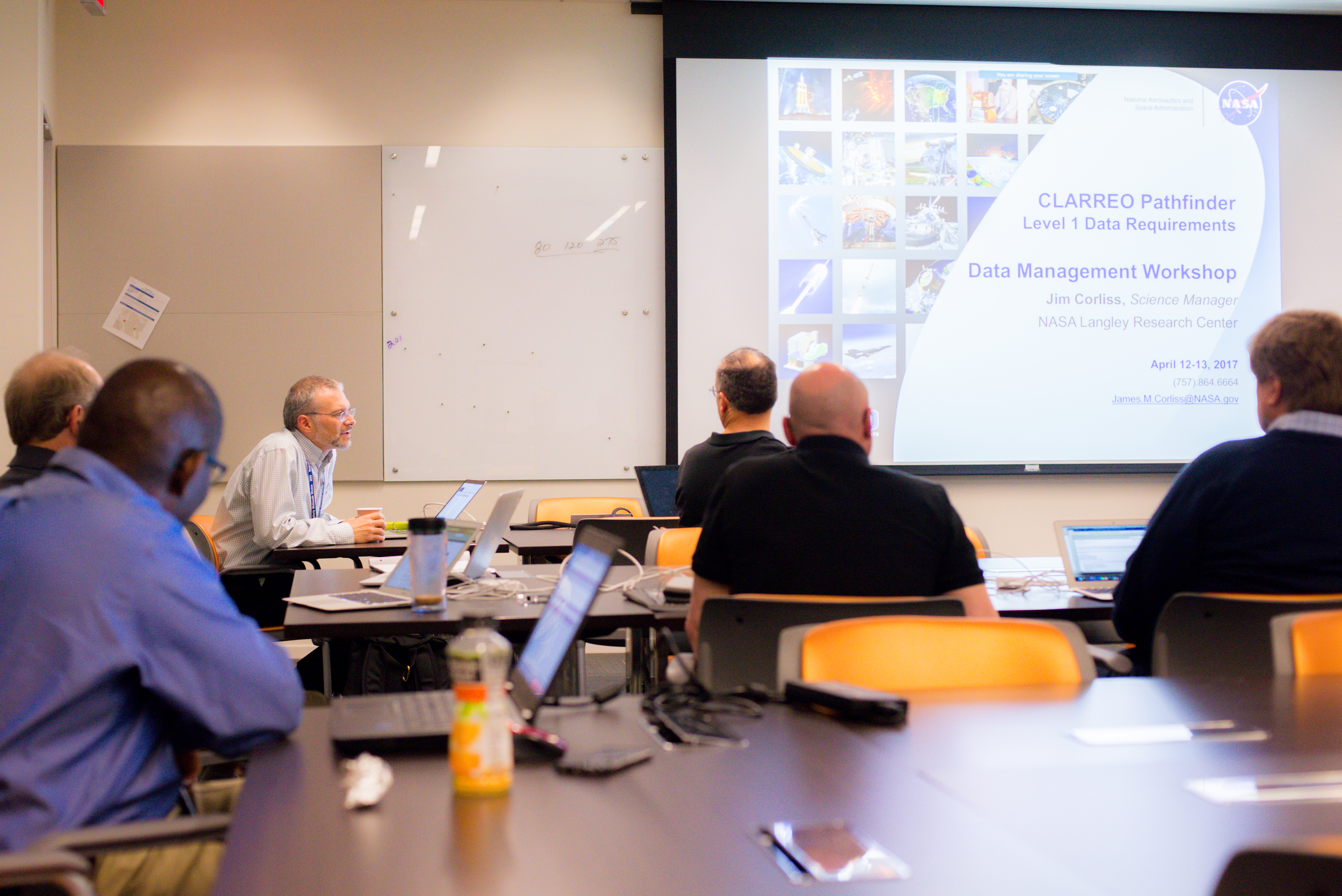
NASA LaRC and LASP teams meet to discuss CLARREO Pathfinder data requirements at a 2-day Data Management Workshop held at LaRC.
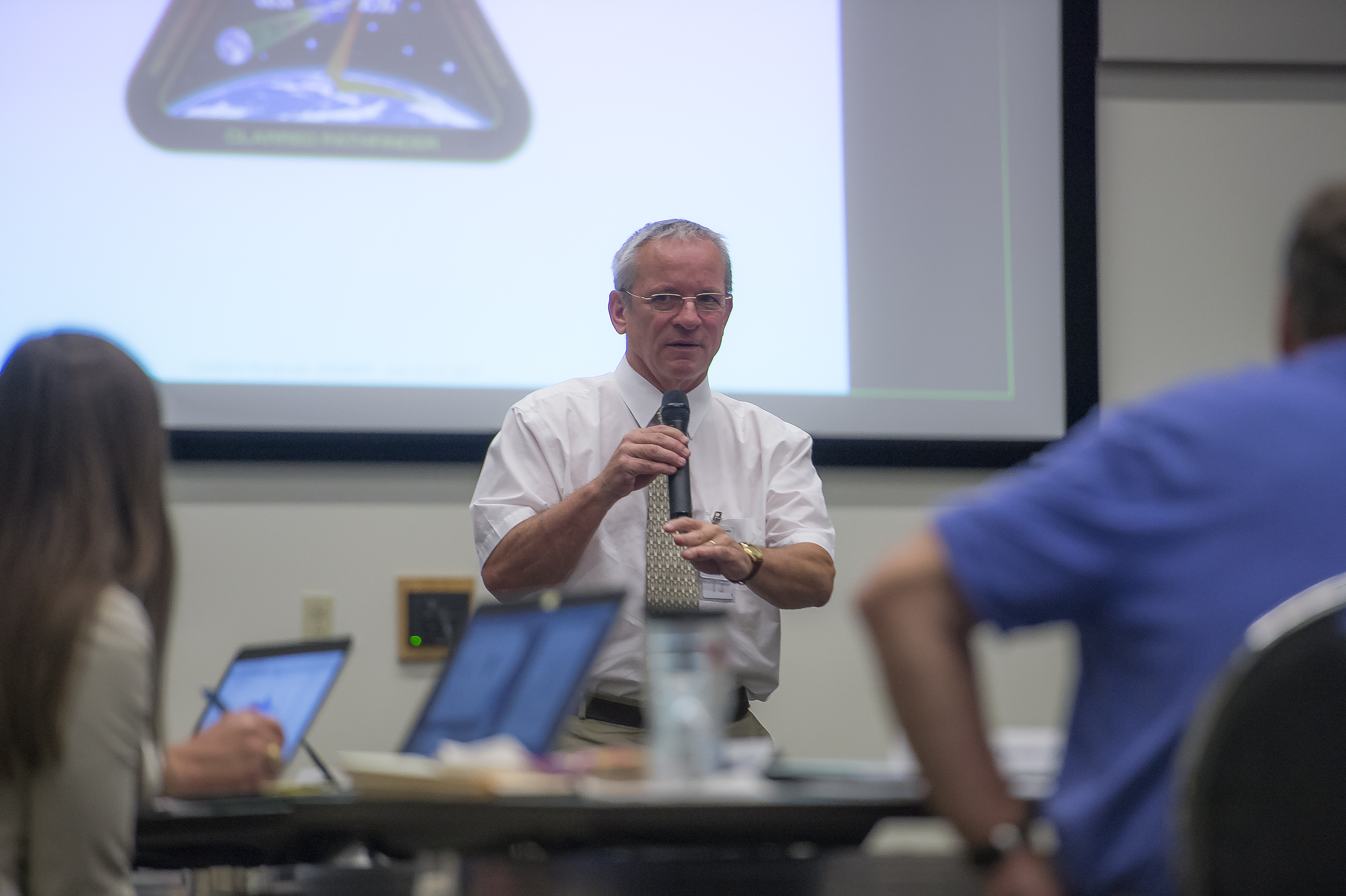
A review panel evaluates the preliminary project plan, system requirements, and proposed architecture to ensure mission requirements will be met.
LASP becomes an official partner of the CPF mission and receives the contract to design, build, integrate, and operate the CPF payload, the core of which is the HySICS instrument.

A review panel evaluates advancements in mission and system requirements and architecture design after programmatic uncertainty incurs delays in the CPF lifecycle. This delta review (Delta System Requirements Review (d-SRR)) ensures any new design elements still satisfy mission requirements.
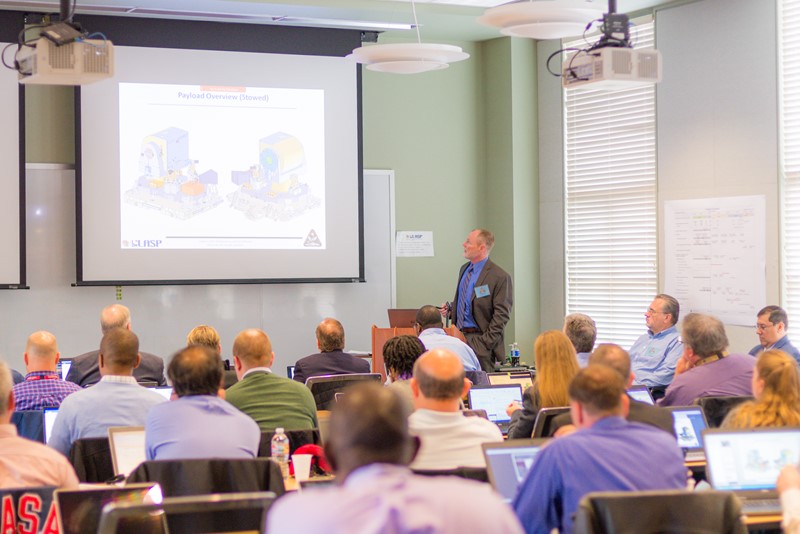
The project further matures the mission concept, architecture, and operations plans. It also matures preliminary instrument and mission design and initiates development of engineering prototypes of key payload subsystems.
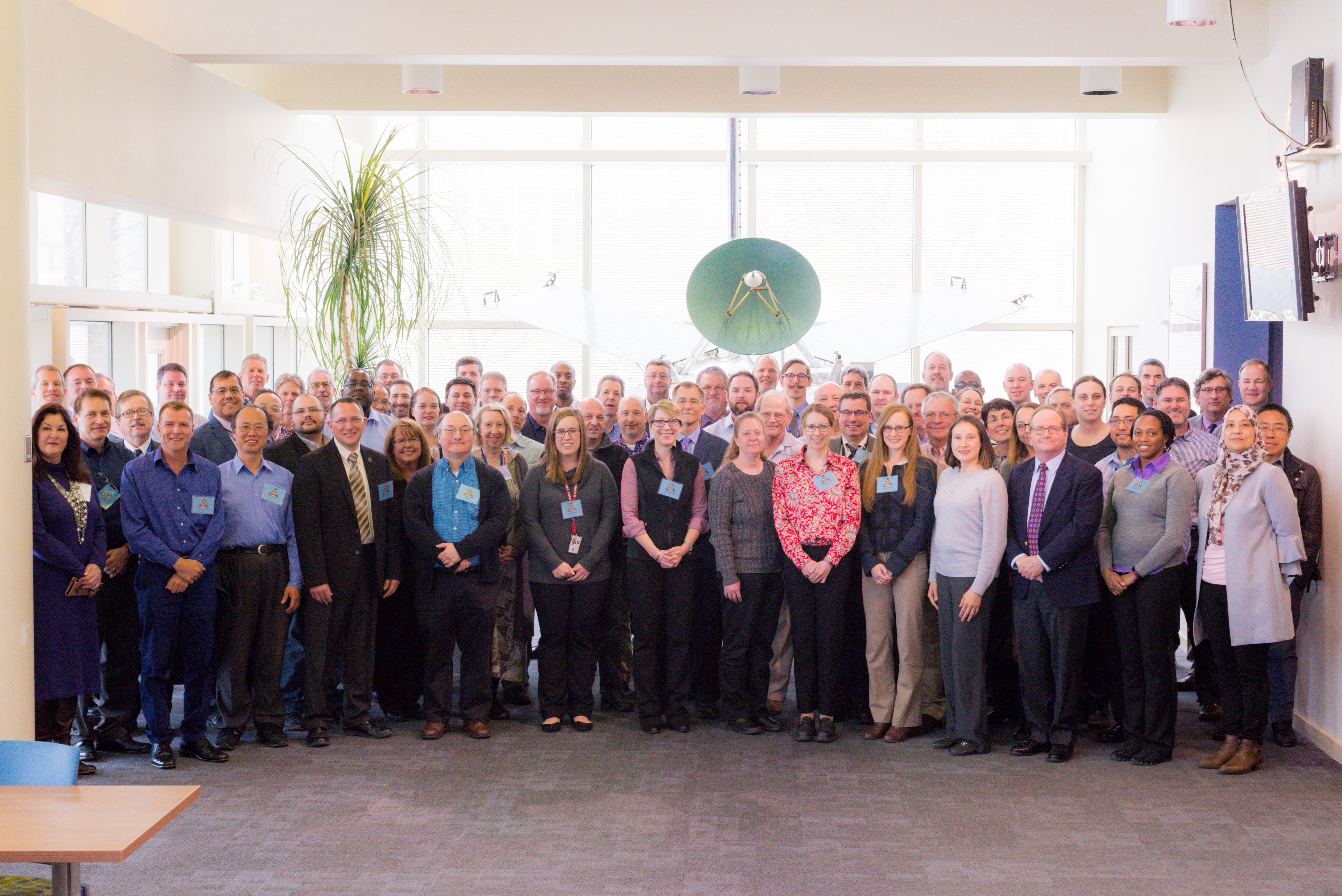
A review panel evaluates the preliminary mission design to assess its compliance with requirements at the Preliminary Design Review (PDR). This includes payload and instrument components, science data processing, and the various mission interfaces.
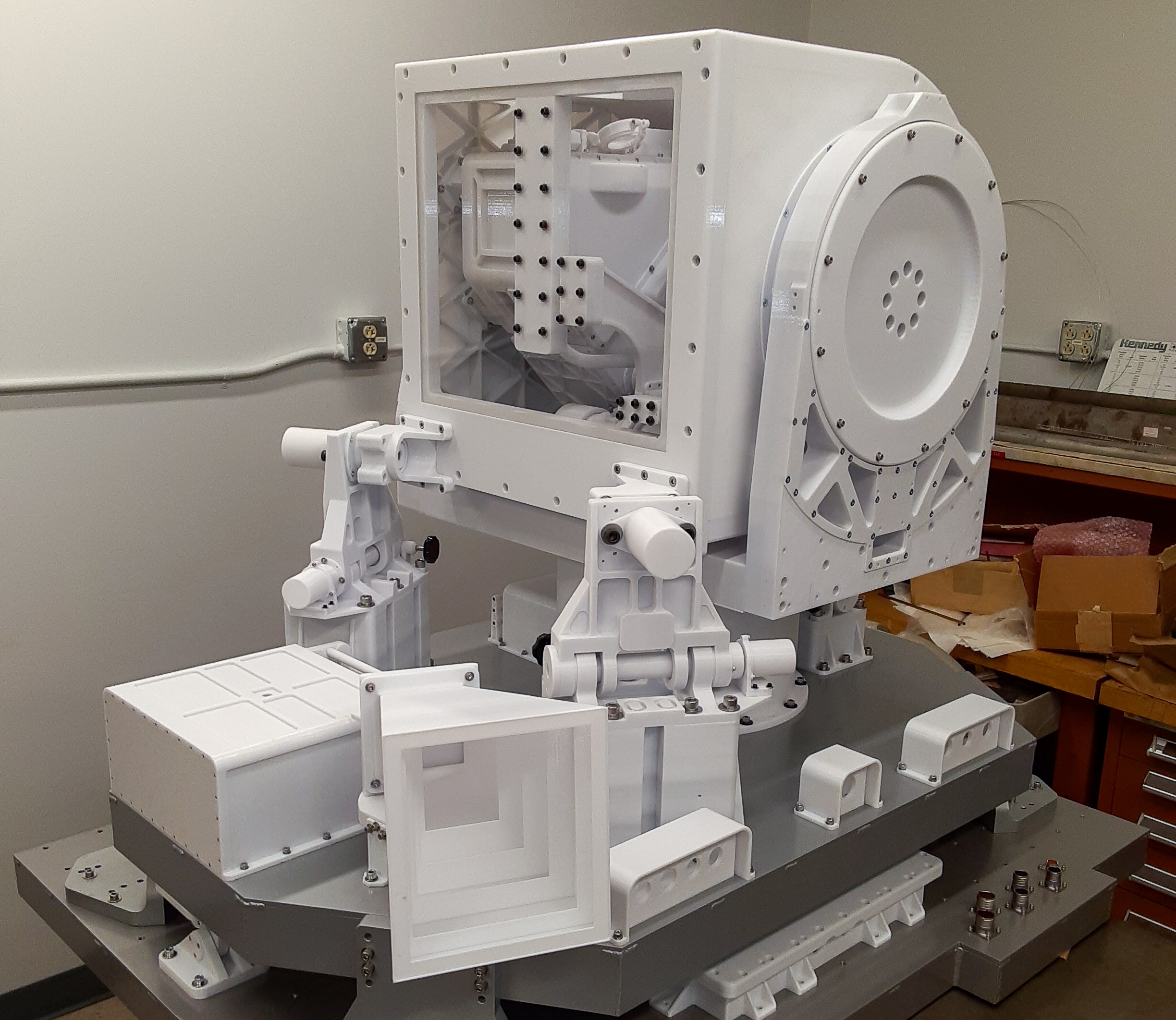
The project completes testing of engineering prototypes of key payload subsystems and develops final detailed payload and ground system designs. Following a Critical Design Review (CDR), the project initiates fabrication, characterization, and testing of the flight payload components and subsystems.
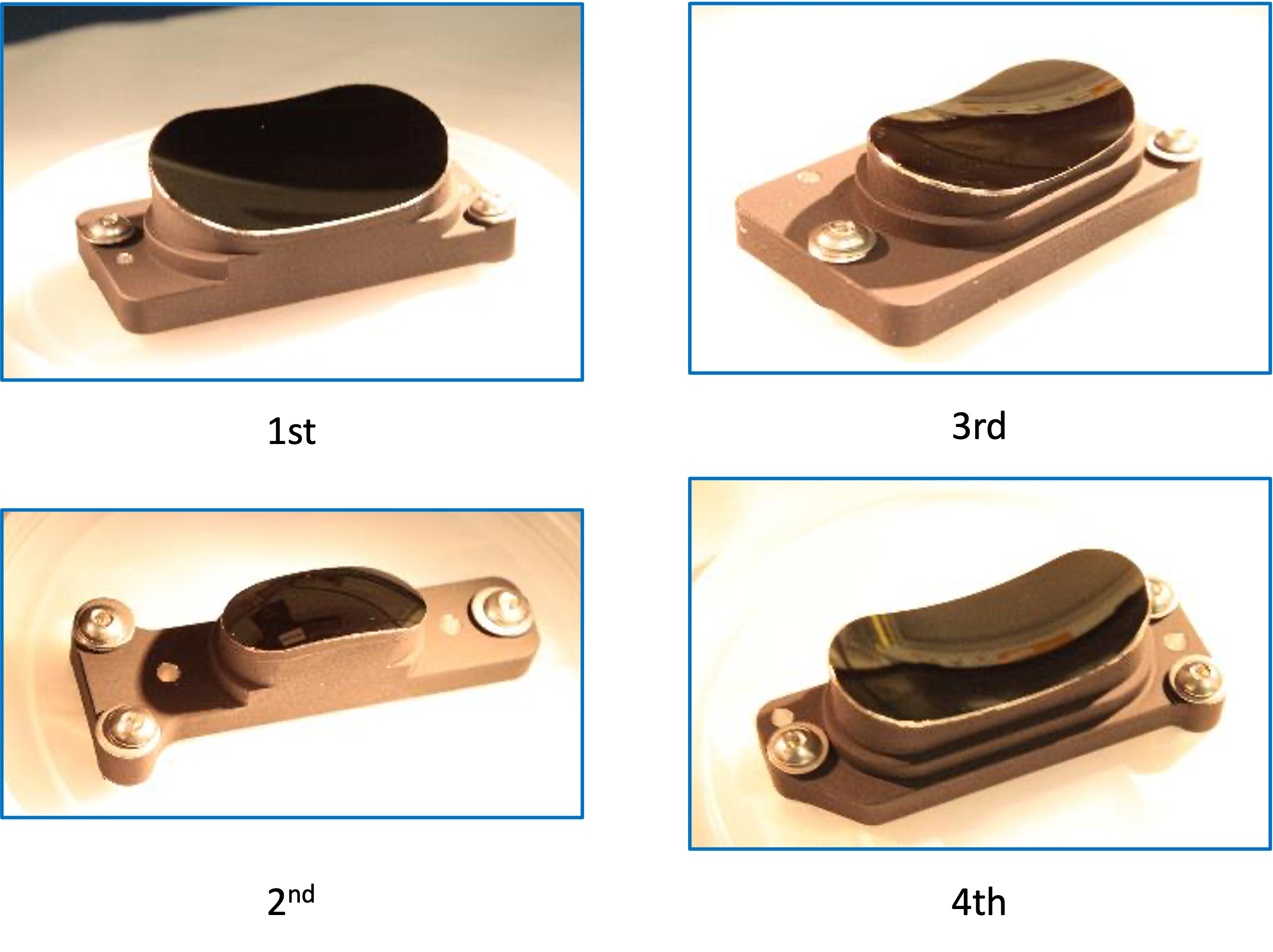
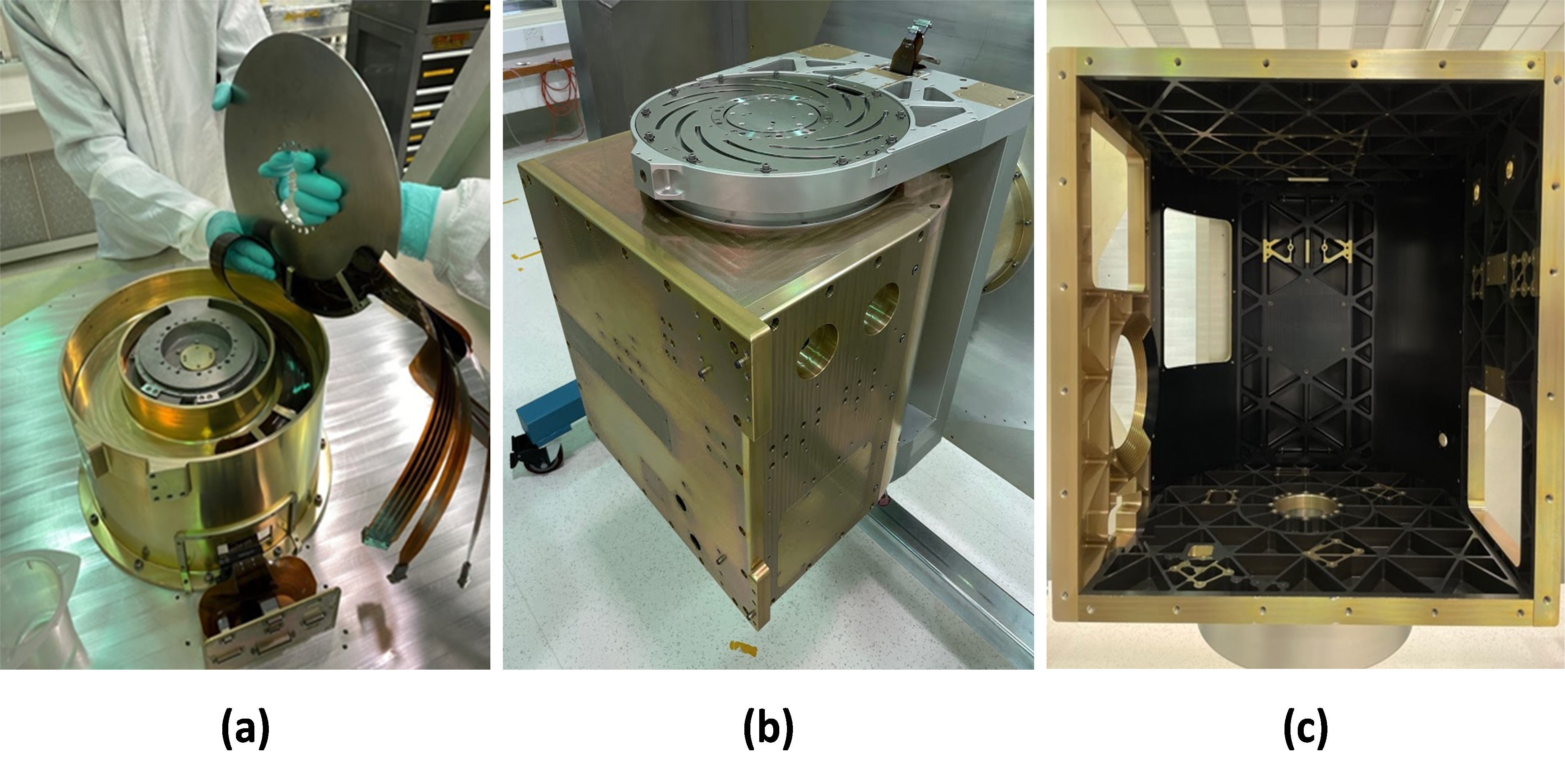
The four-mirror anastigmat telescope is a critical component of the HySICS instrument optics.
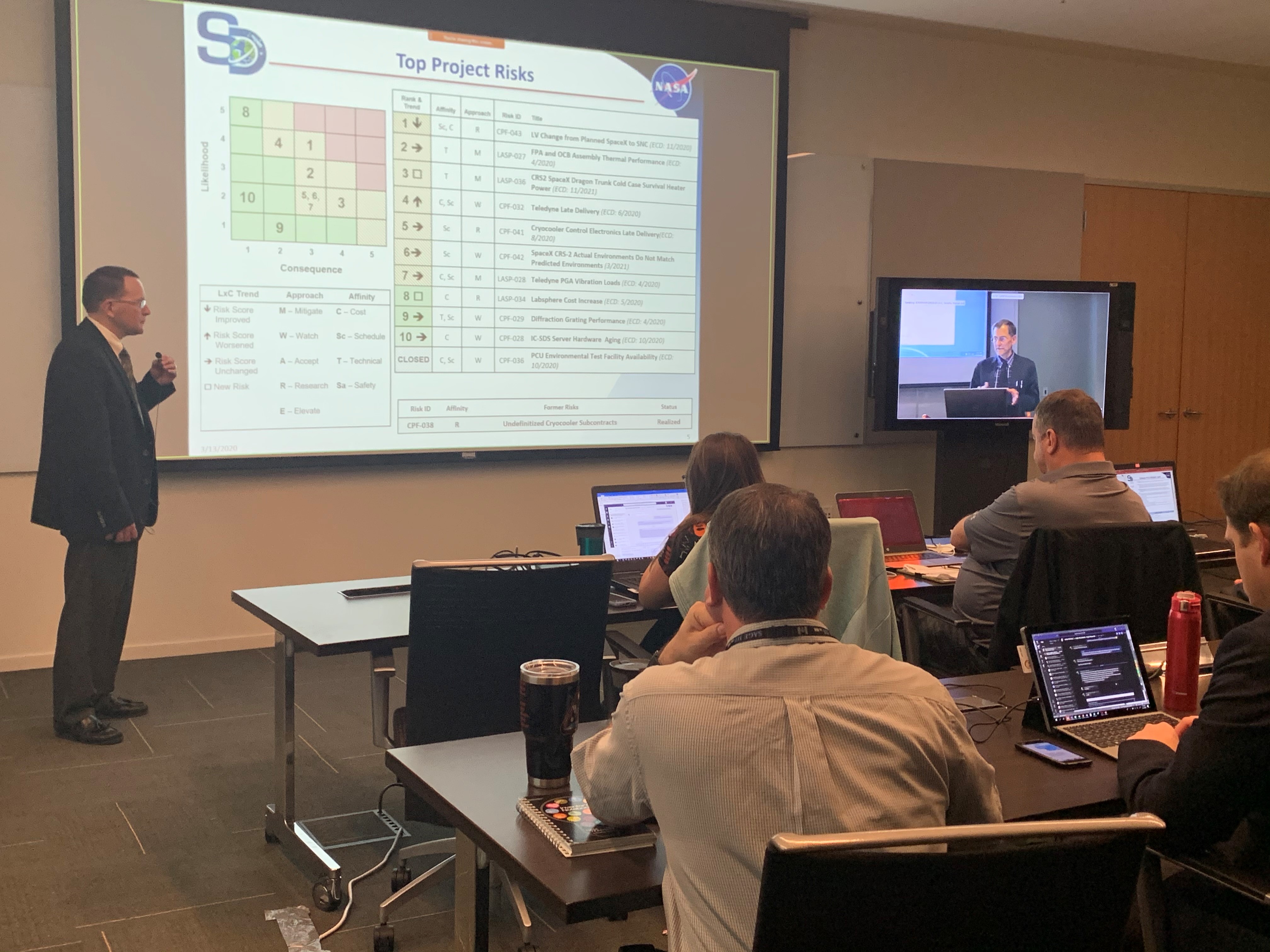
A review panel evaluates the matured payload and mission design for its ability to meet requirements and the project’s readiness to continue with payload fabrication and assembly at the Critical Design Review (CDR). Incidentally, this meeting took place just as COVID-19 restrictions were starting and was conducted in a hybrid format.
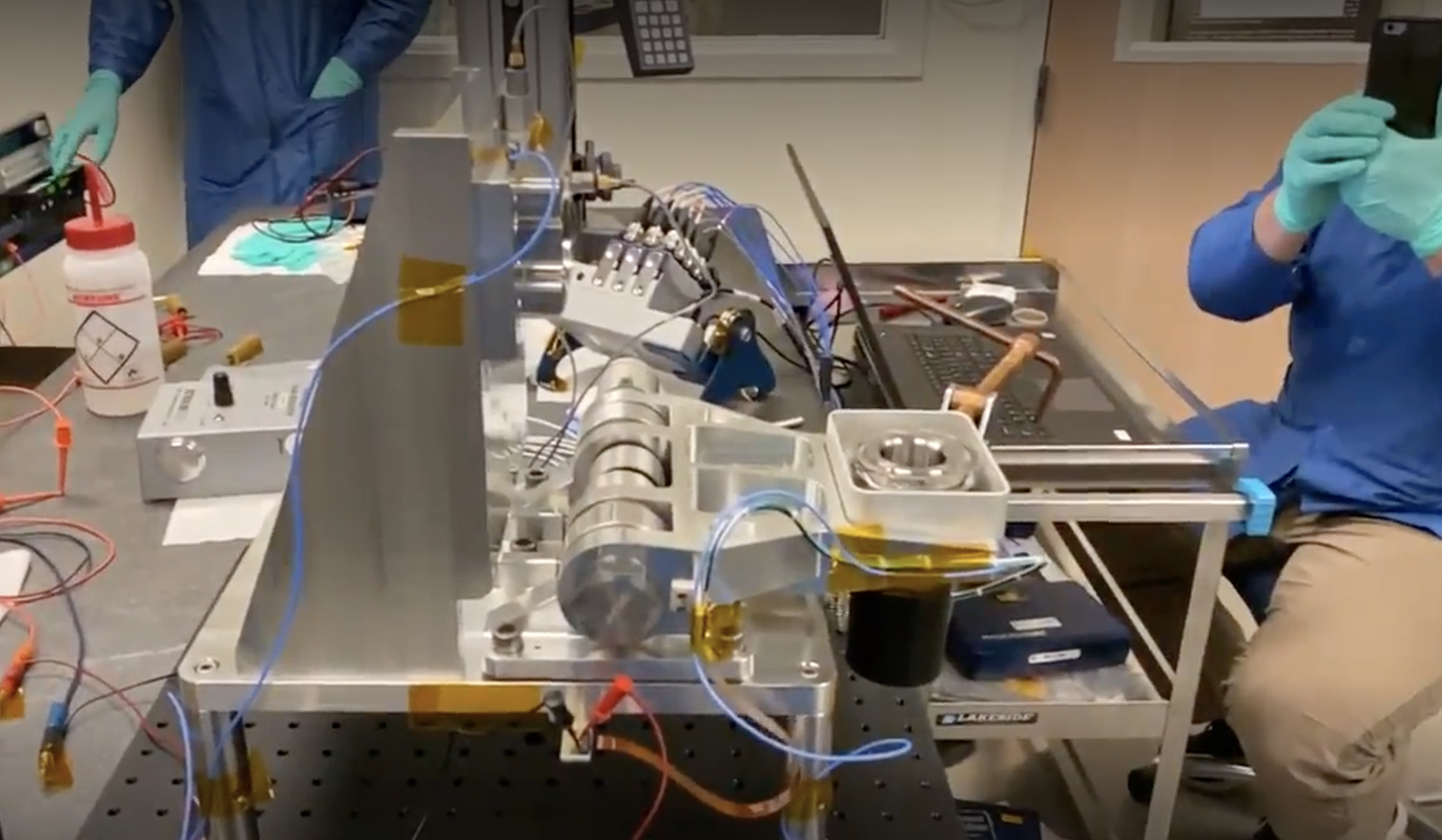
Here, the LASP team celebrates a successful test of the launch locks, which prevent the pointing system from moving during launch and installation on ISS.
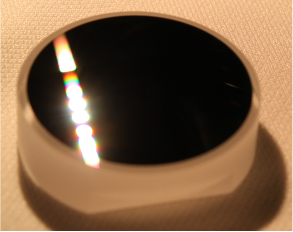
The gratings, similar to the back of a CD, separate reflected light into different wavelengths with tiny grooves, invisible to the human eye. This is another critical piece of the HySICS optical system.
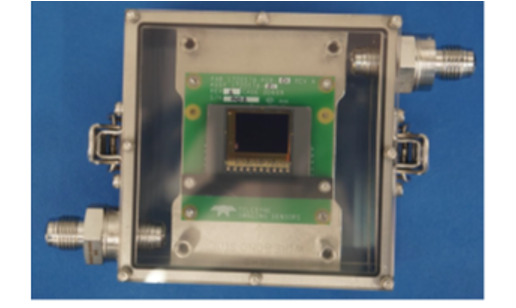
The reflected sunlight is directed onto the detector by mirror and grating reflections. The detector converts that sunlight into electrical signals that are processed for scientists to analyze.
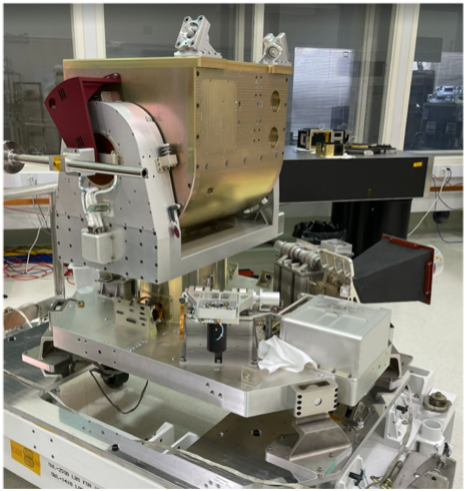
The instrument cradle is where the HySICS instrument and support electronics will reside.
The LASP team continues working on the pointing system. The pointing system moves the cradle to enable HySICS to take measurements of the Earth, the Moon, and the Sun at different angles.
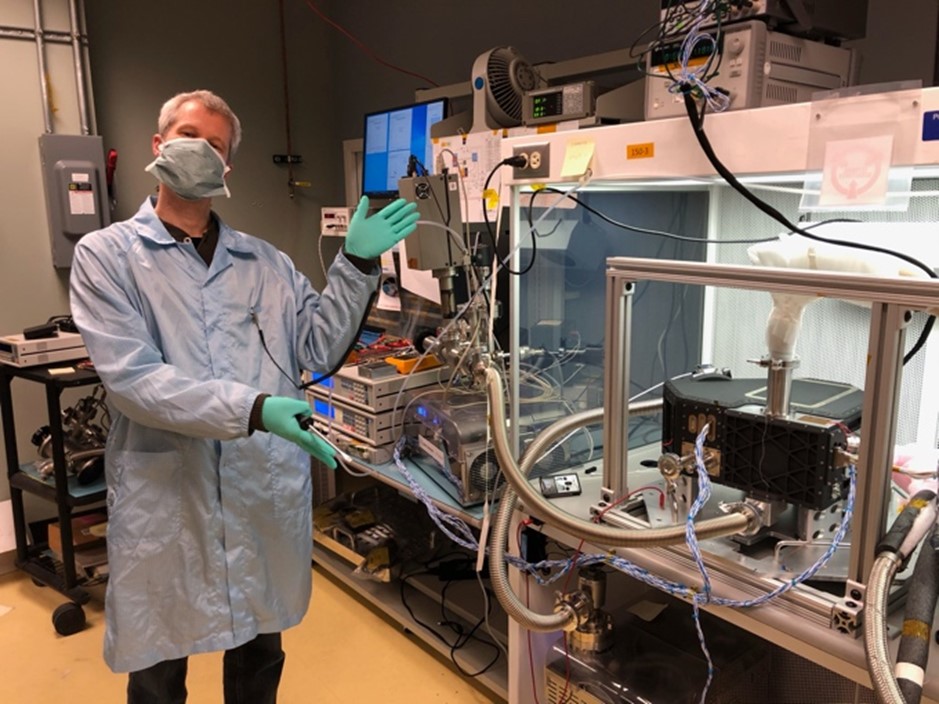
The HySICS Calibration Lead (Paul Smith) poses with the intricate HySICS instrument test setup.
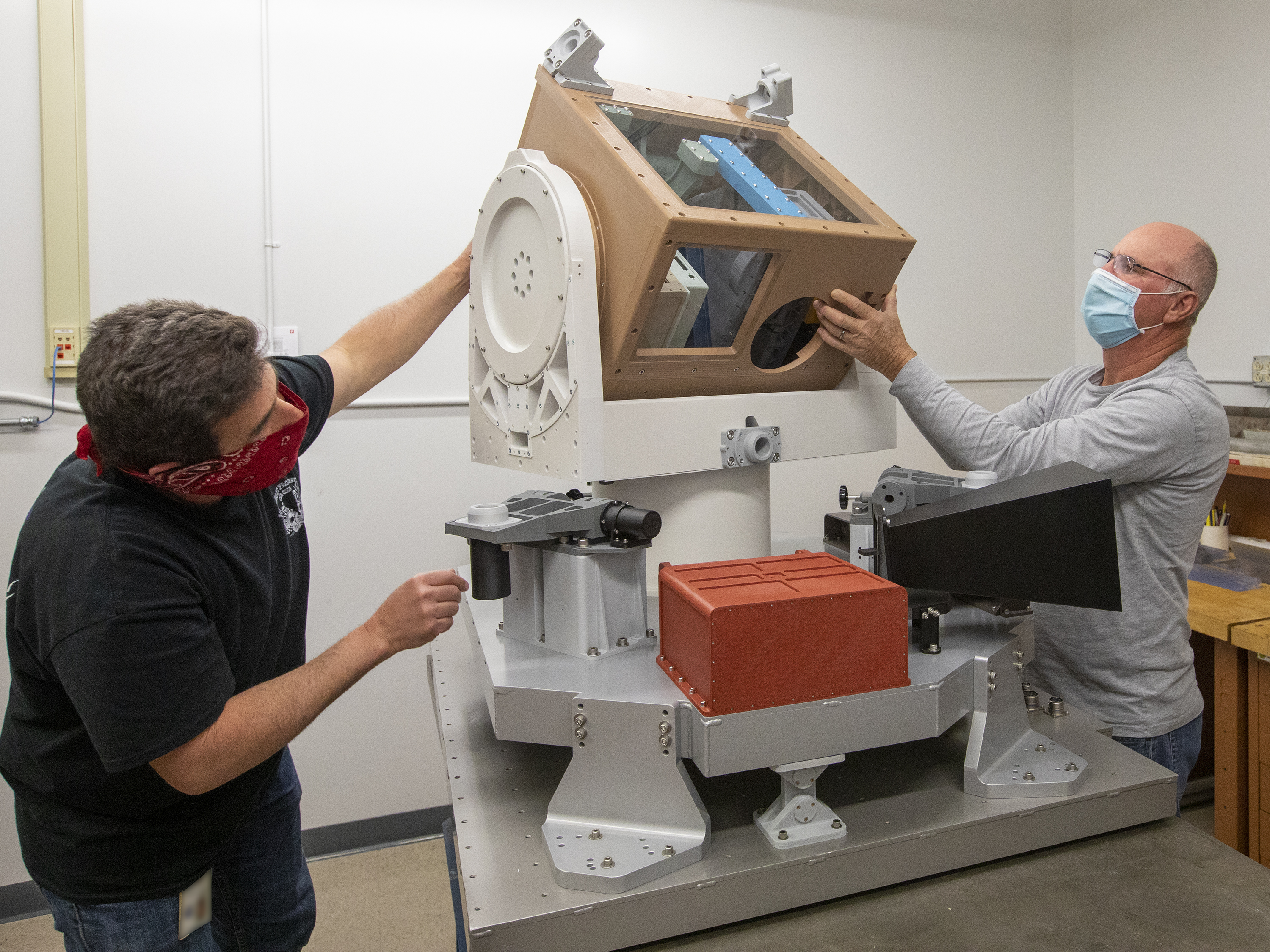
One 3D model remains at LaRC for outreach purposes, and the other 3D model was sent to LASP and has been used in the lab as the team maps out the location of harnesses.
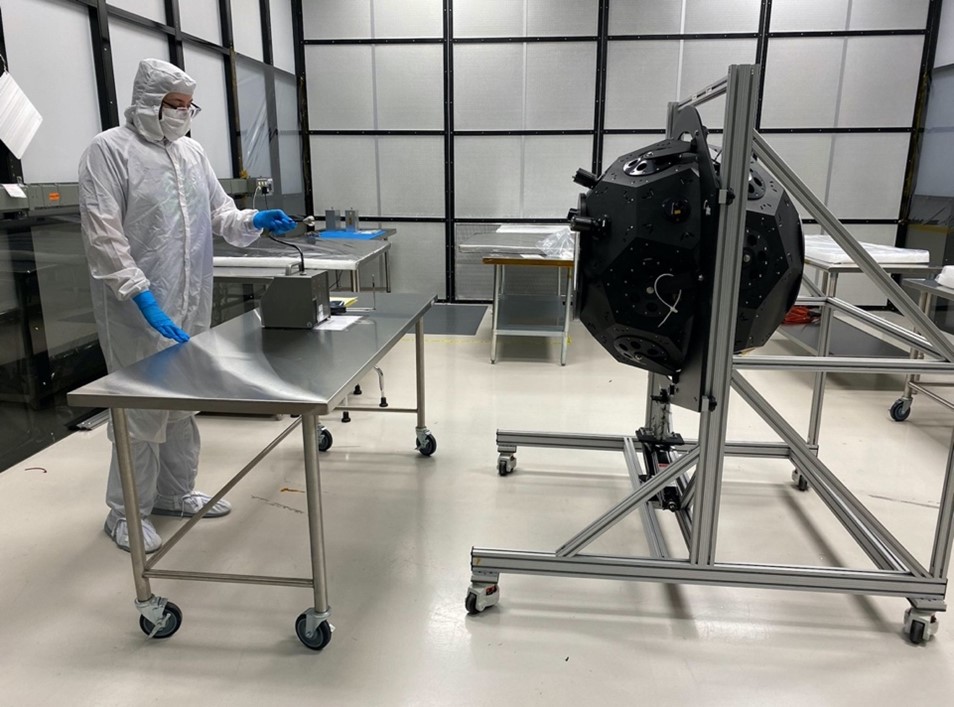
Particle count measurements are taken of the Goddard Laser for Absolute Measurement of Radiance (GLAMR) integrating sphere in a Class 10K clean tent at Goddard Space Flight Center (GSFC) in preparation for Independent Calibration.
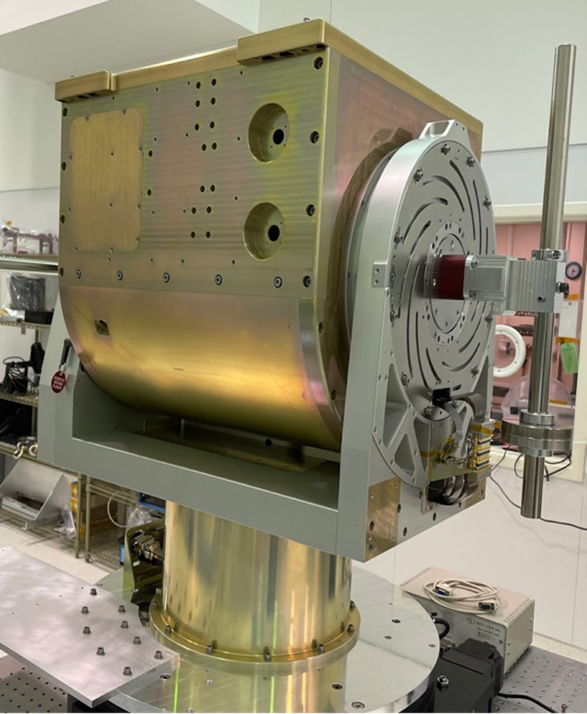
The components that make up the HySICS Pointing System are integrated at LASP.
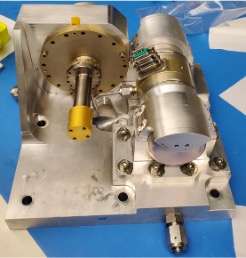
The cryocooler keeps the different parts of the instrument at their ideal operating temperatures.
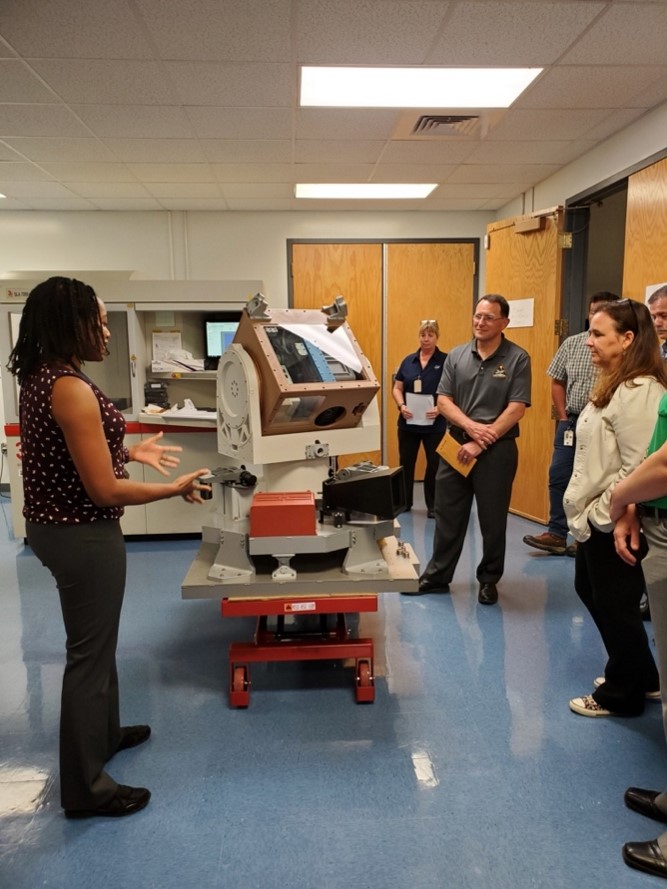
Another important part of any mission is talking about the mission and its value with others. Project Scientist Yolanda Shea discusses the CLARREO Pathfinder mission using the team’s 3D model during NASA ESD Director Karen St. Germain’s visit to NASA LaRC.
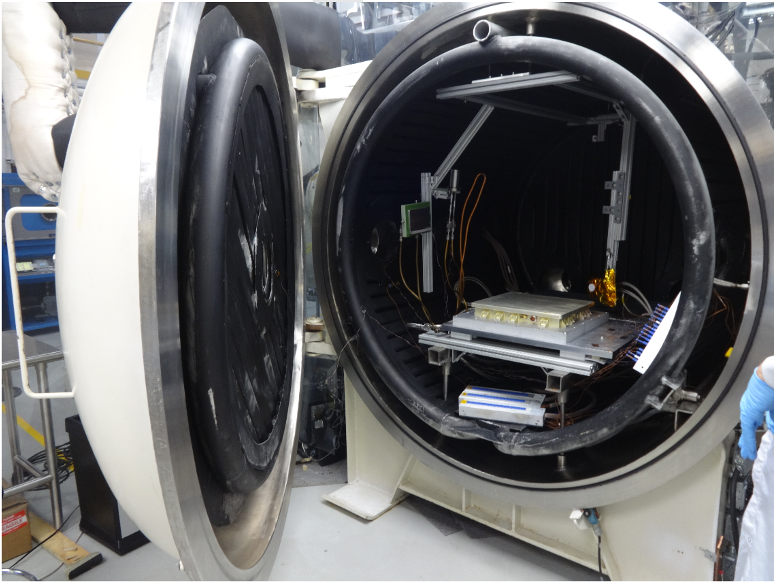
The PCU serves as the power interface between CPF and the ISS, ensuring that the right level of power is delivered to the rest of the CPF payload. Built and tested at Langley Research Center, the PCU is subjected to vibration and thermal conditions that mimic the environments during launch and operations.
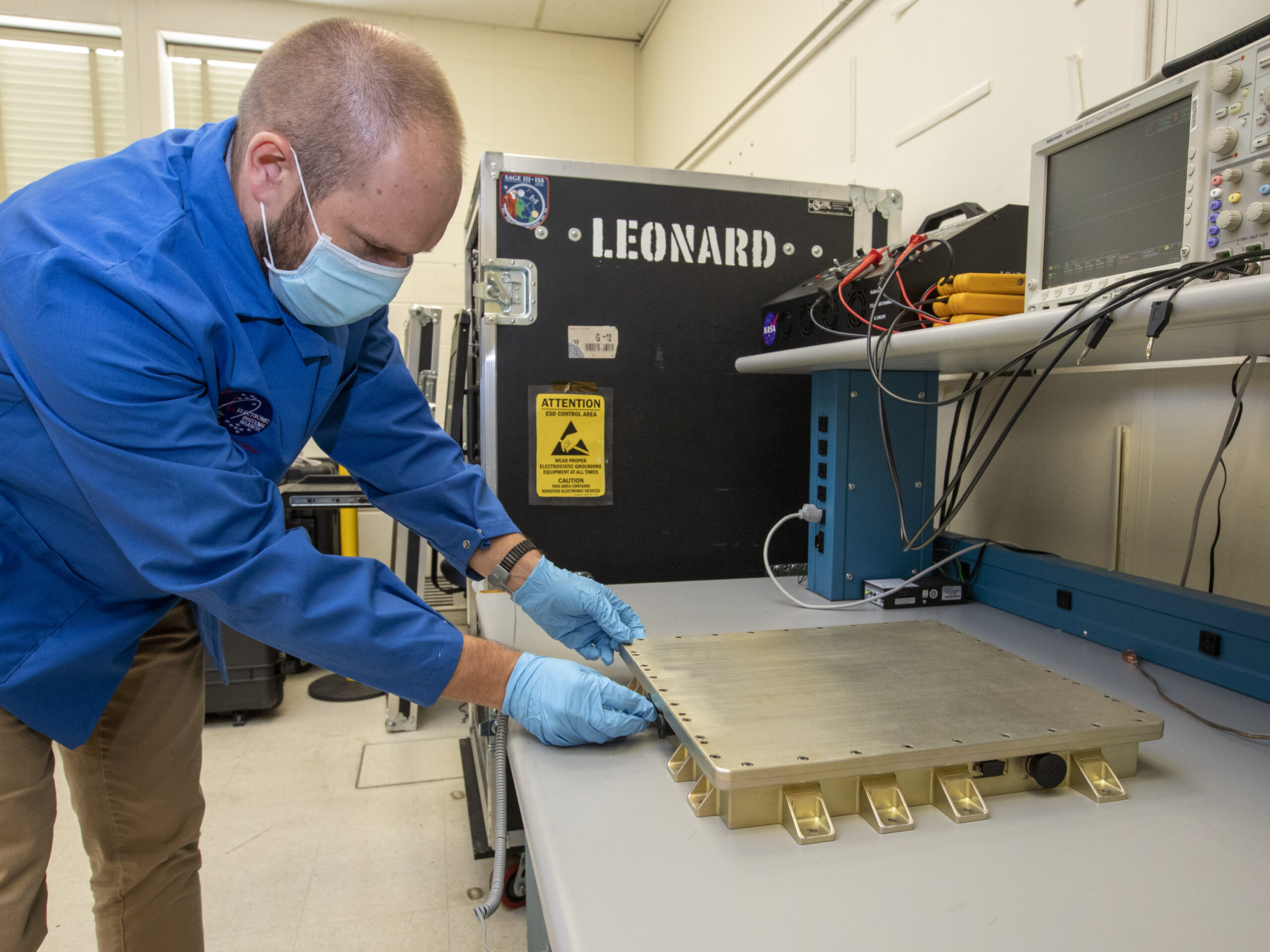
PCU assembly and testing is complete and ready to be shipped to LASP. The PCU is ready to be integrated with the rest of CPF.
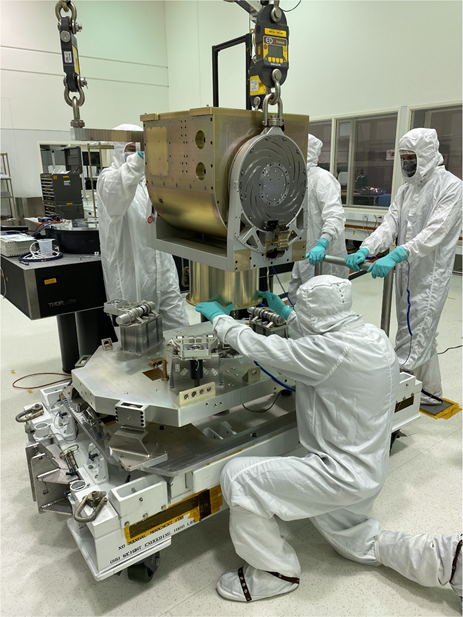
After extensive testing to ensure the HySICS Pointing System can operate as designed, the pointing system is carefully positioned onto the baseplate to prepare for the next collection of HPS tests.
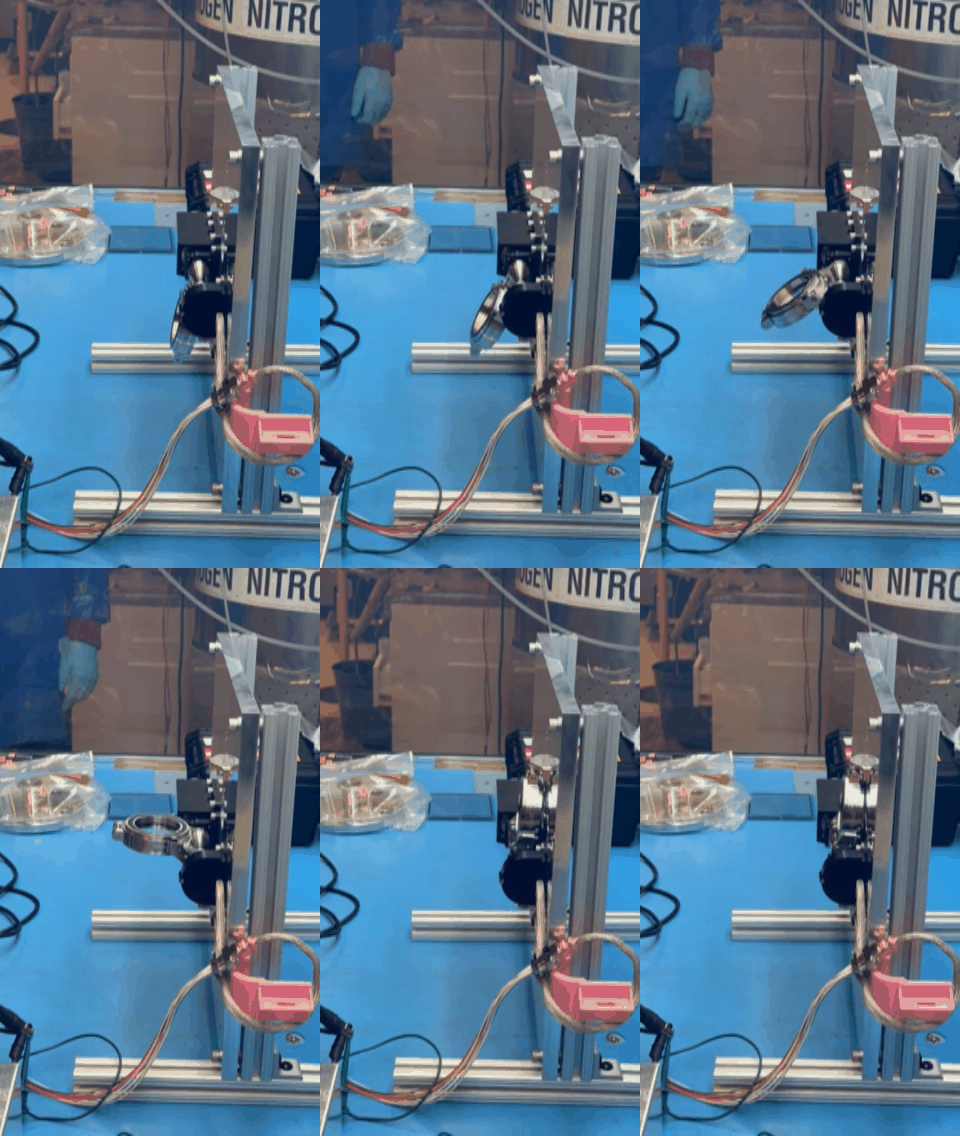
The contamination door protects the instrument from debris and keeps HySICS optics clean during launch. The contamination door will be opened after the payload is installed on ISS and before science operations begins.
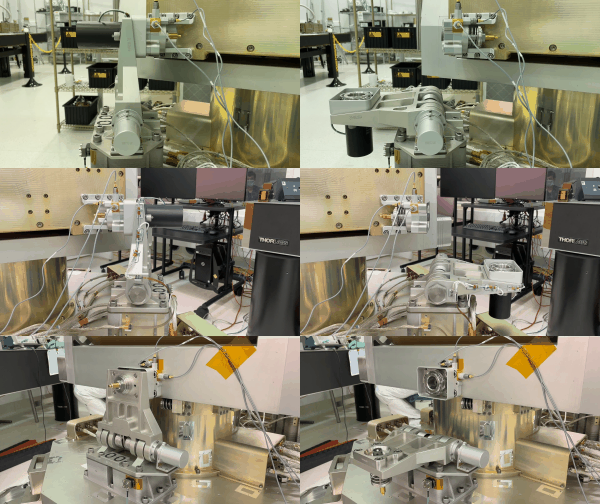
Launch locks keep the HySICS Pointing System secure during launch to ISS. The launch locks will deploy after installation on ISS and will enable CPF to point at the Sun, Moon, and intercalibration science targets.
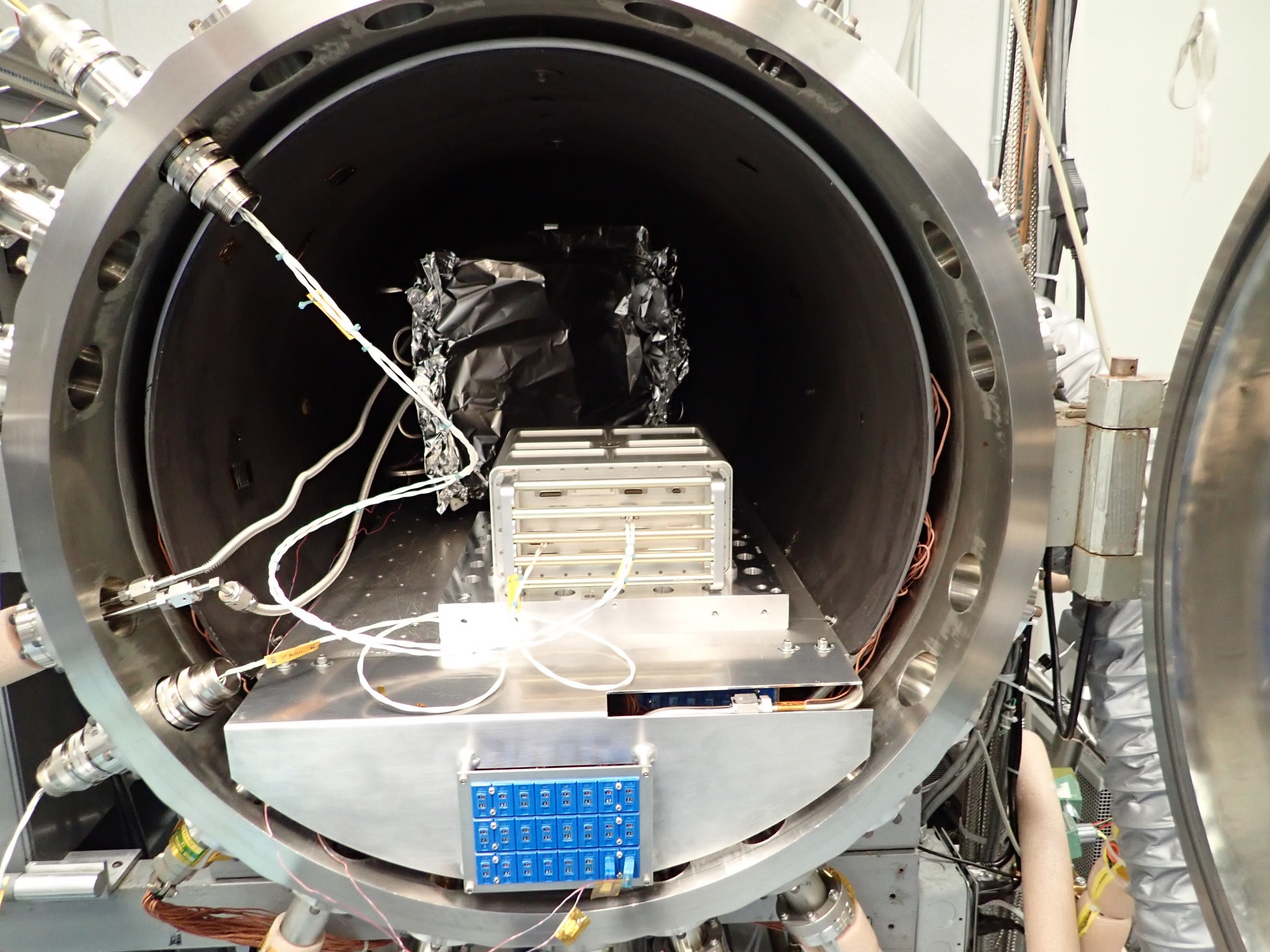
The HPSC is subjected to thermal and vacuum conditions that mimic the environments during launch and operations.
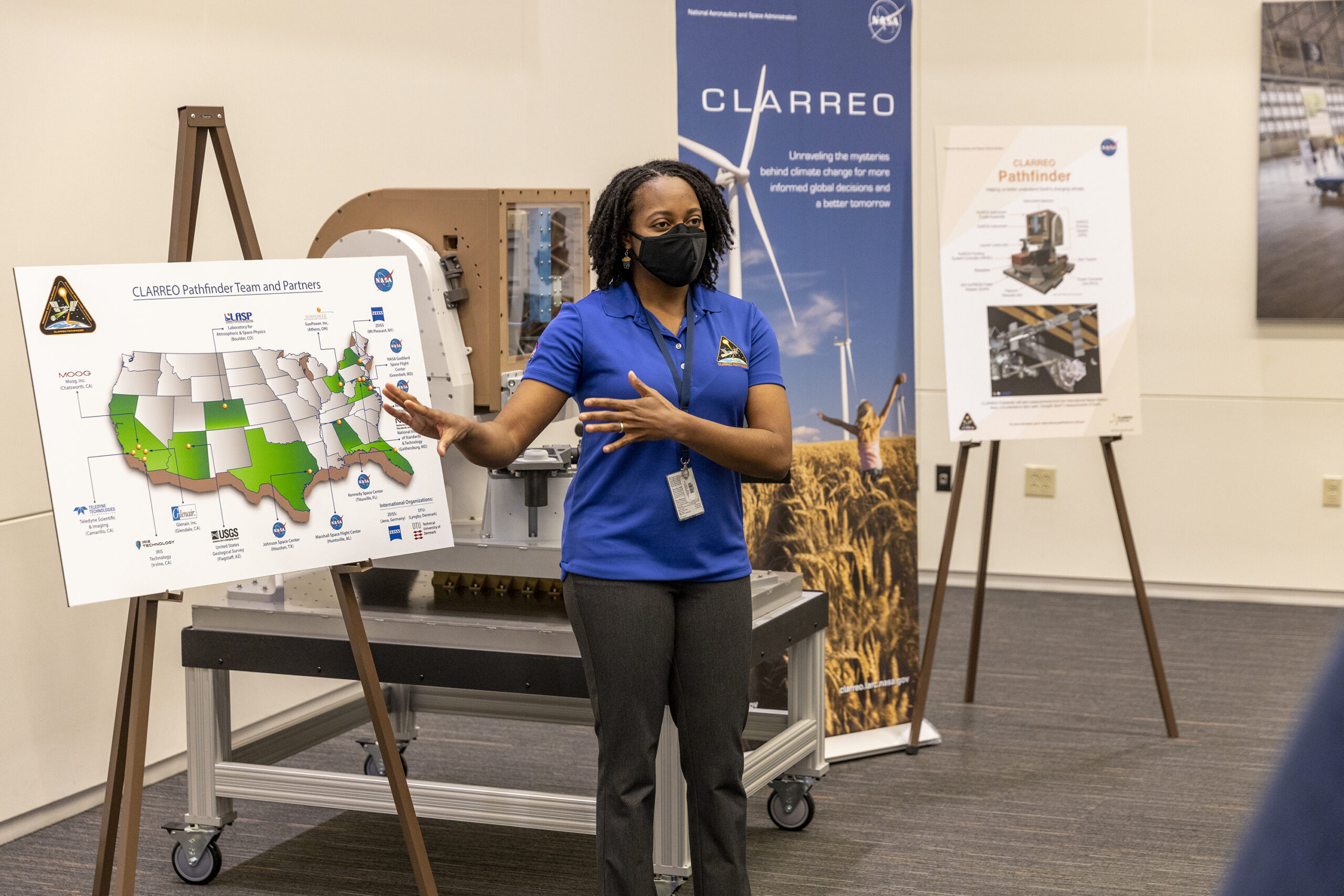
Project Scientist Yolanda Shea delivers an overview of the CPF mission to NASA Administrator Bill Nelson.
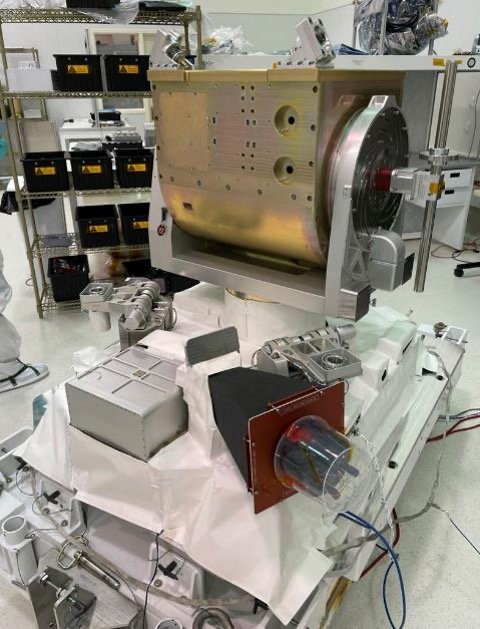
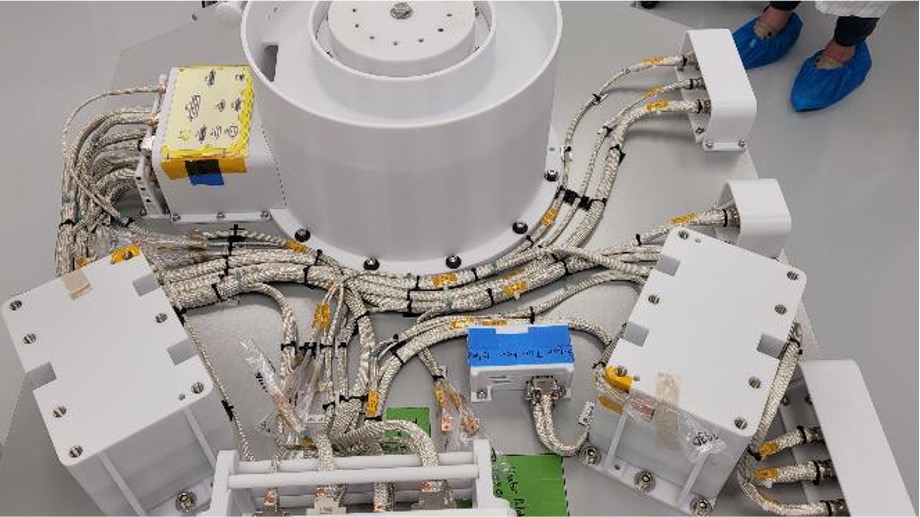
Thermal Blankets (in white) cover the baseplate of the payload to provide constant temperature control of the sensitive instruments.
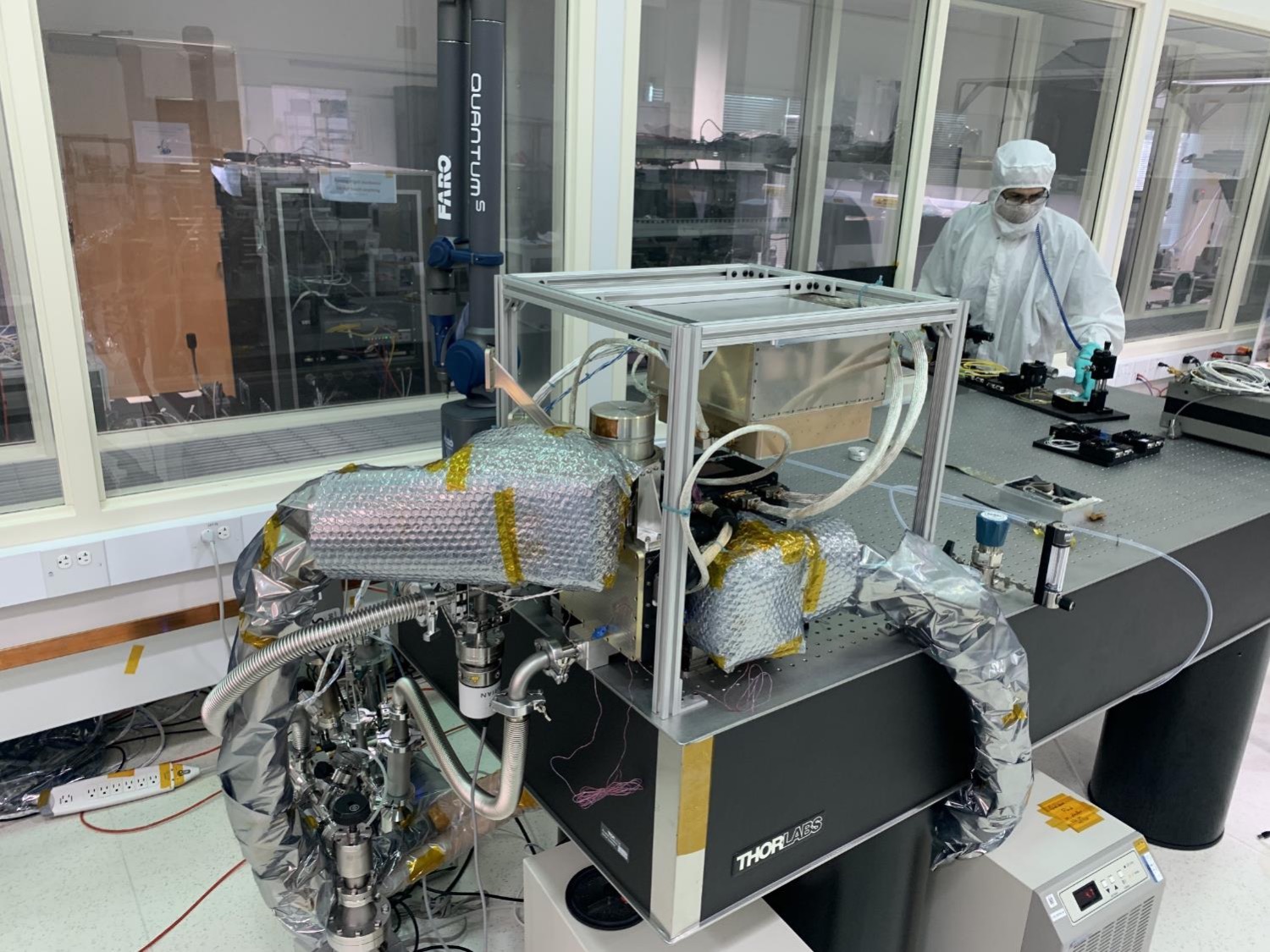
The cryocooler keeps the detector at very low temperatures to optimize performance. First cooldown and demonstration of thermal control is completed with the cryocooler.
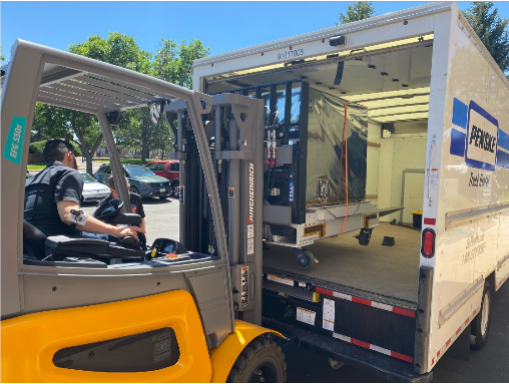
HPS Vibration Testing is completed at Ball Aerospace, only a few miles from LASP. Even when just moving HPS down the road, precautions are taken to make sure the flight hardware is moved safely and securely.
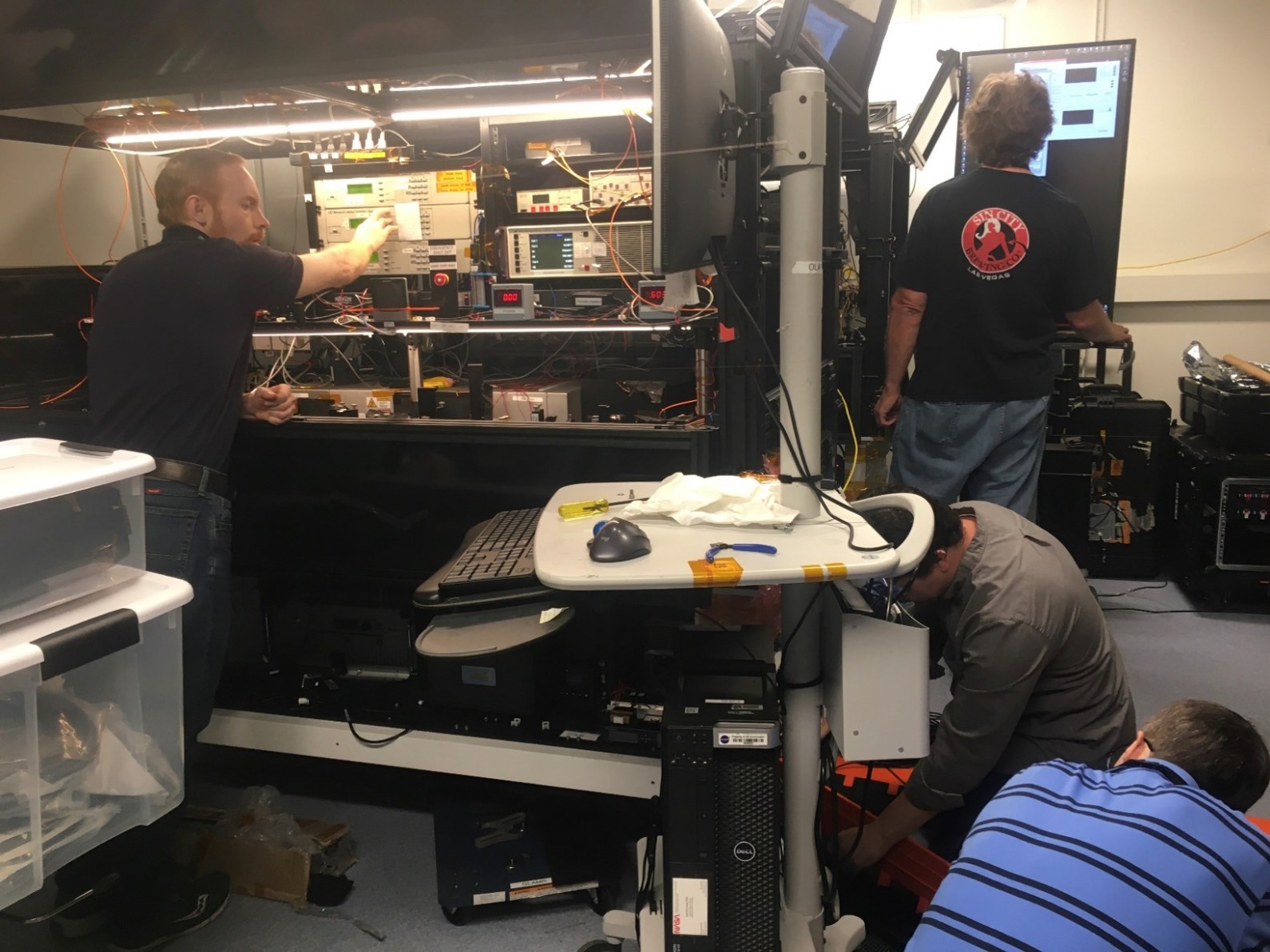
The Independent Calibration Team ships the GLAMR system to LASP and sets up the system in preparation for independent calibration testing.
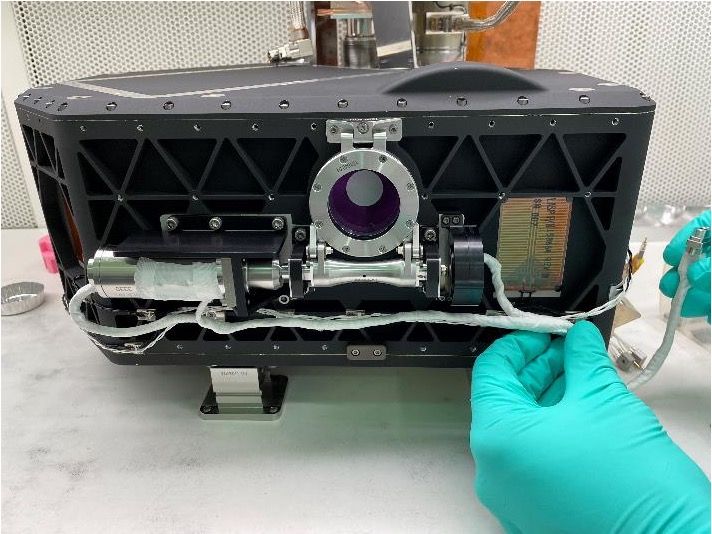
After a successful test of opening the door in January 2022, the contamination door is installed onto the HySICS instrument enclosure.
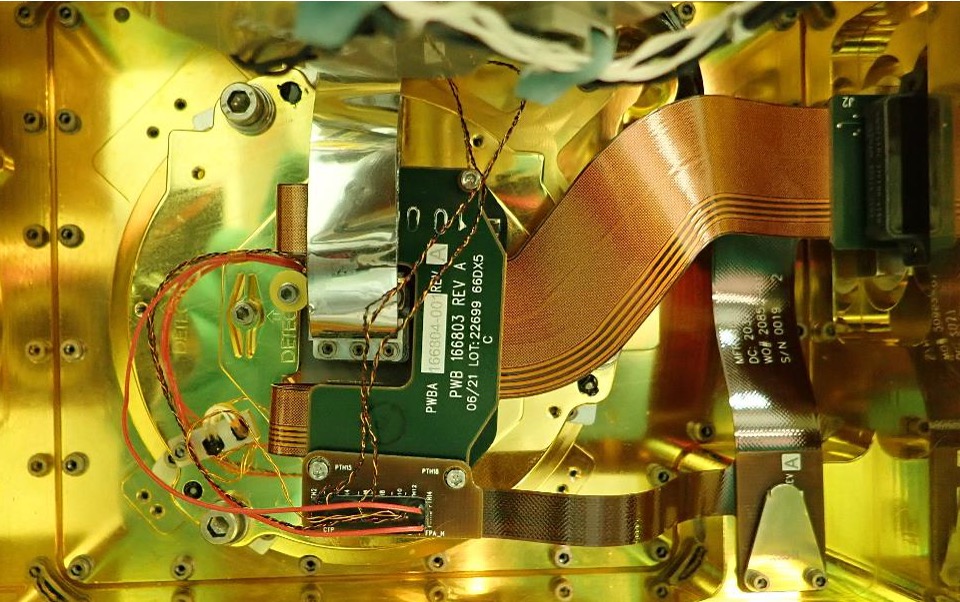
After extensive testing of the appropriate position and alignment of the detector, the team celebrates a significant milestone: permanently fastening the detector within the instrument!
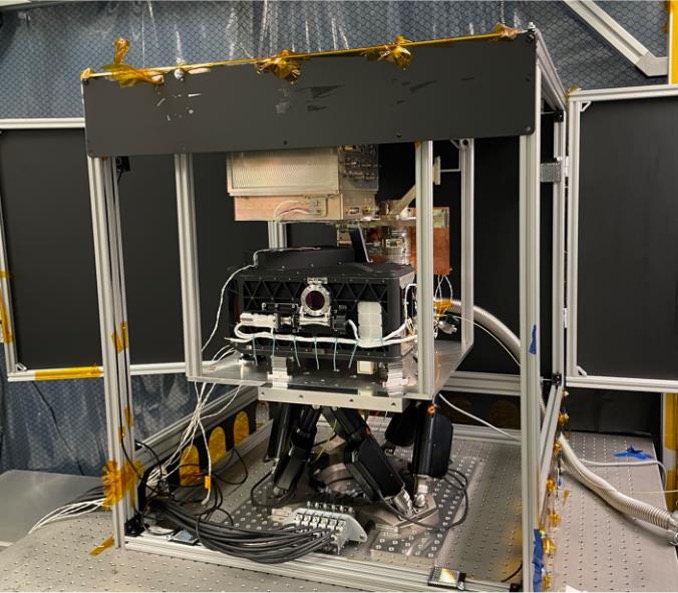
The HySICS team overcomes the challenge of how to get the optical cold bench cold enough for a critical test by brainstorming and implementing a creative solution with new lab equipment. As a result, the test is completed successfully!
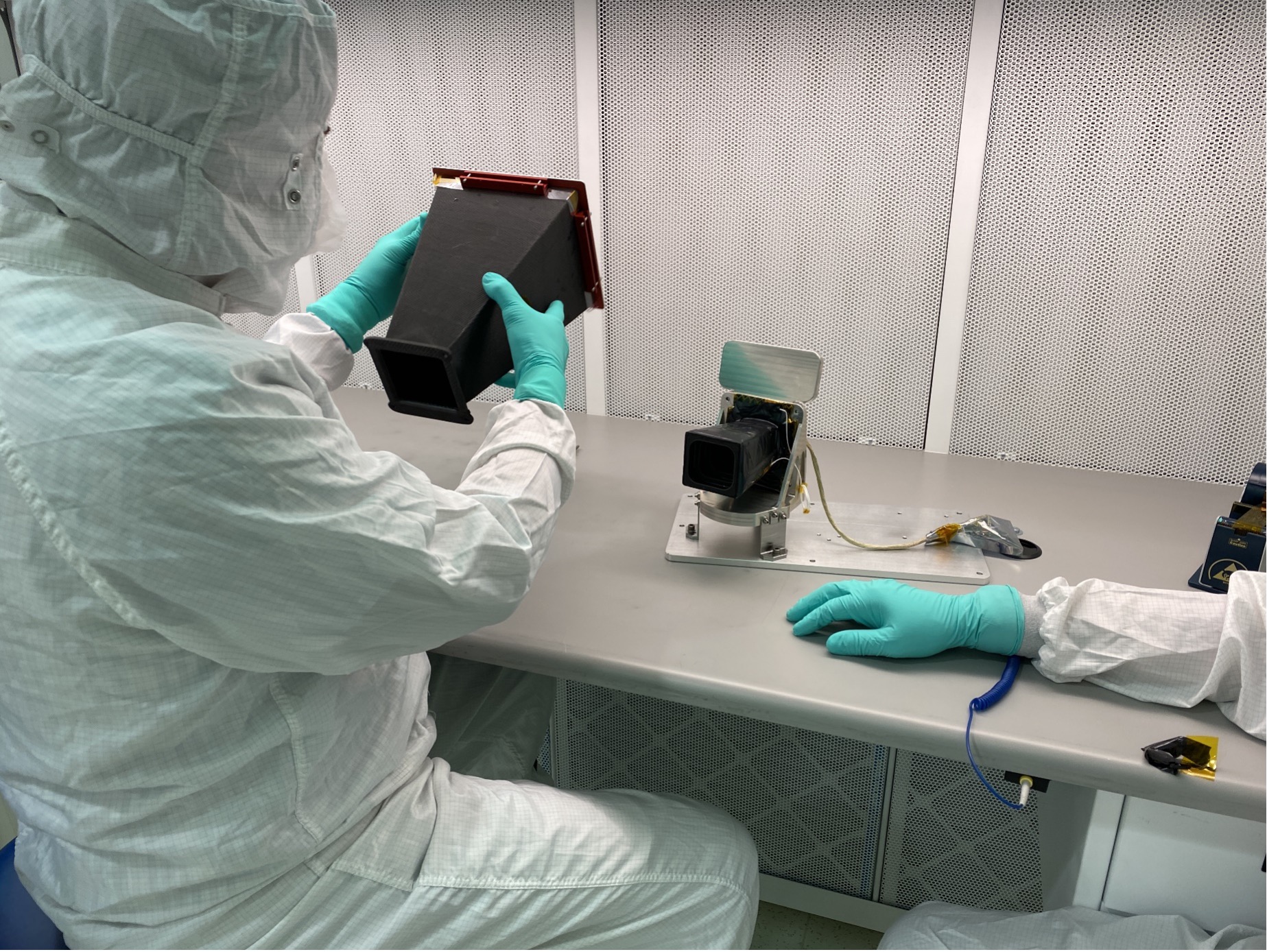
Developing spaceflight hardware often involves collaborations from around the globe. LASP hosts personnel from the Technical University of Denmark (DTU) so they could make needed updates to the Star Tracker they provided for the CPF payload.
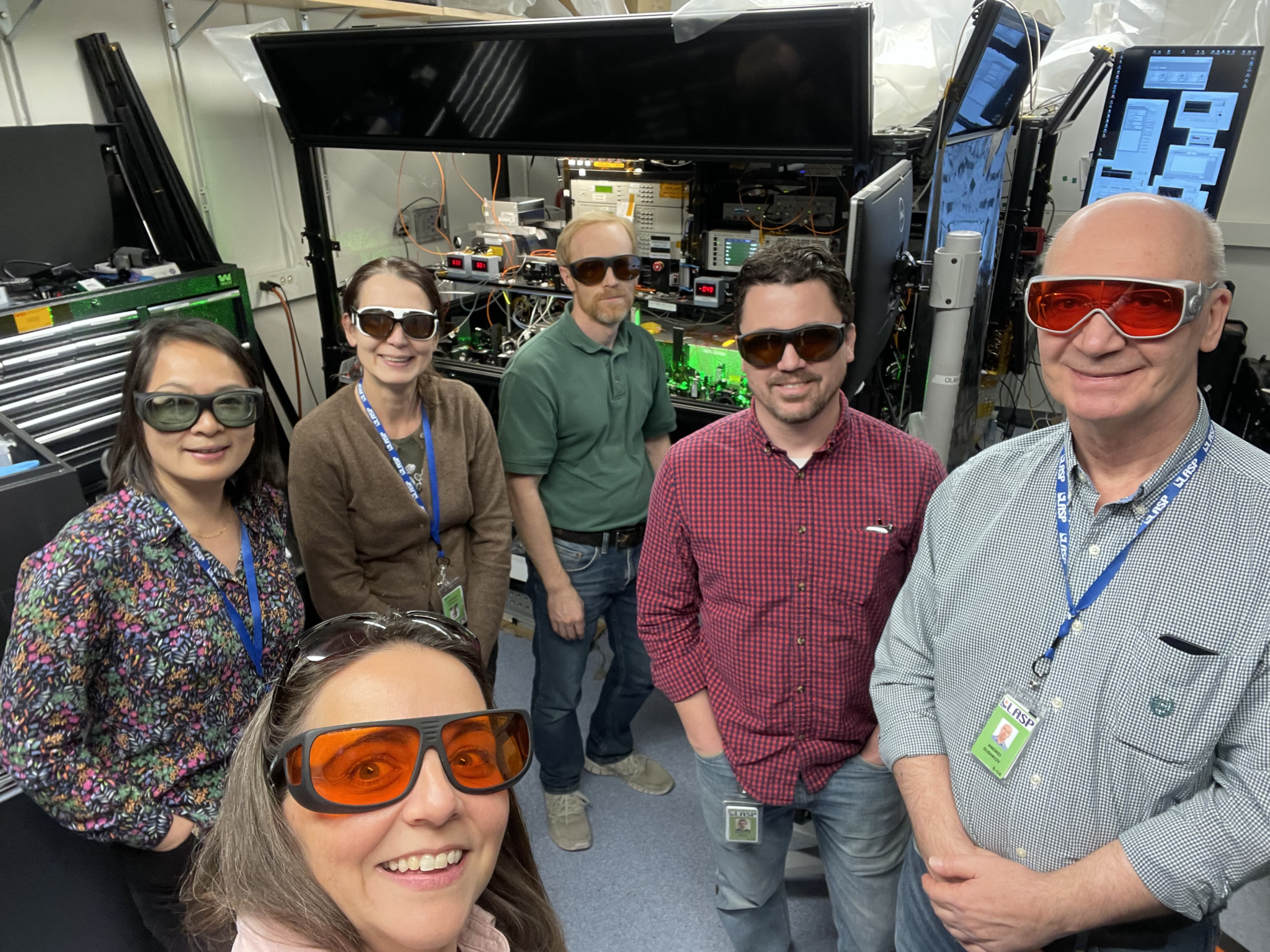
The GLAMR team works on the complex set up needed to conduct the independent calibration test, which will provide an alternative radiometric calibration of the CPF instrument.
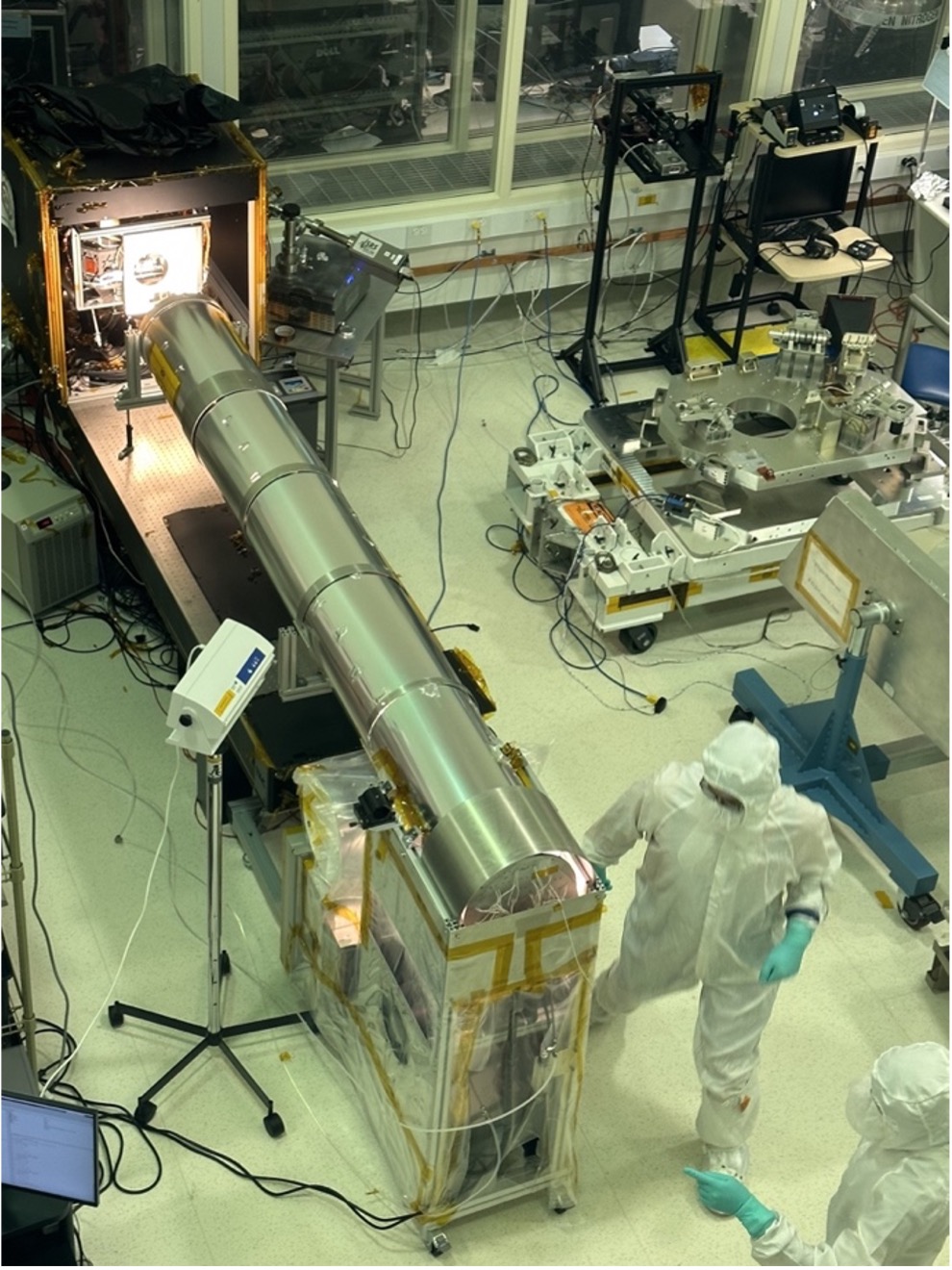
Over the previous year, the HySICS team at LASP completed an extensive series of instrument characterization tests. These tests provide confidence that the instrument will perform as expected in achieving its unprecedented accuracy once it’s in space.
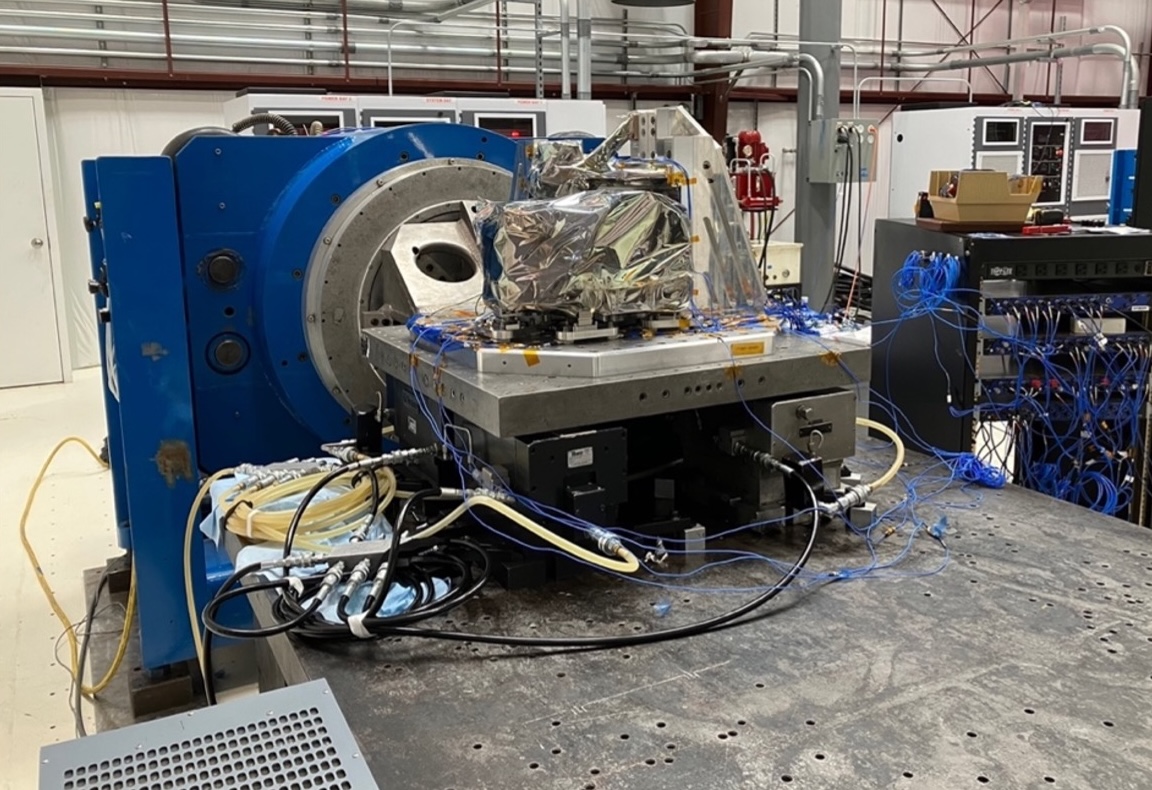
The HySICS instrument completes vibration testing at National Testing Systems (NTS) Santa Clarita. Vibration testing supports confidence that the CPF instrument will survive launch and function as expected once on-orbit.
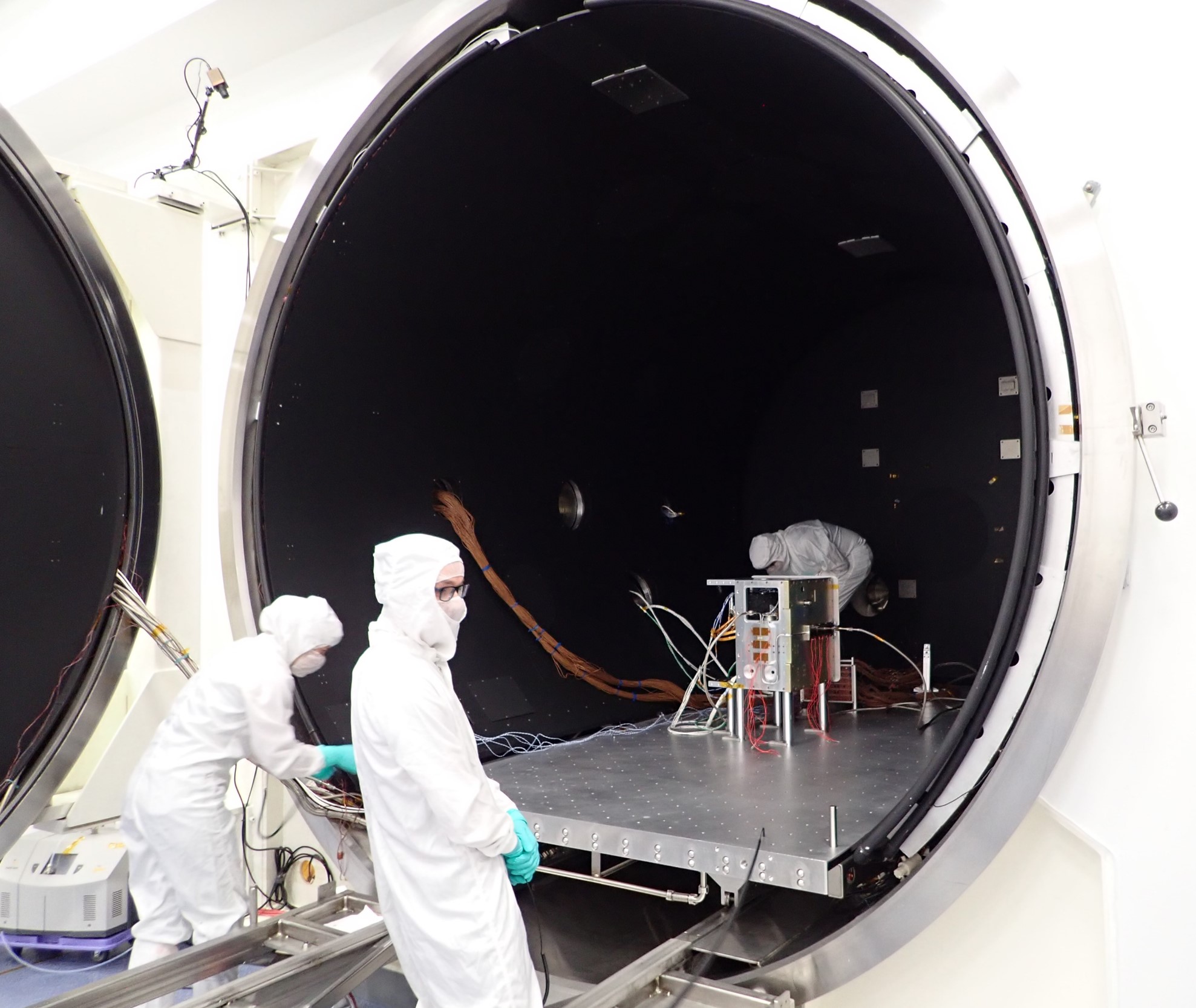
Operating in space is no small feat! HySICS TVAC testing provides confidence about how the instrument’s components will handle operation in space.
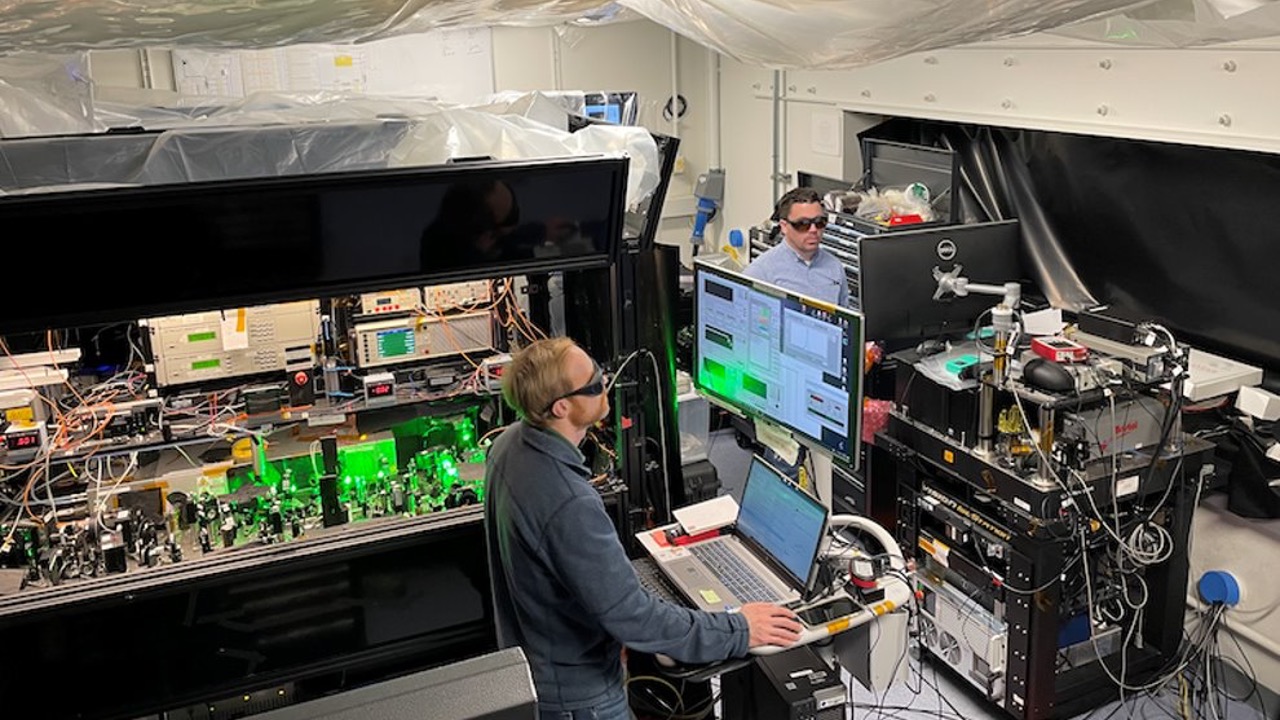
The GLAMR team, along with the LASP and Independent Calibration teams, completes 10 days of independent calibration testing of HySICS.
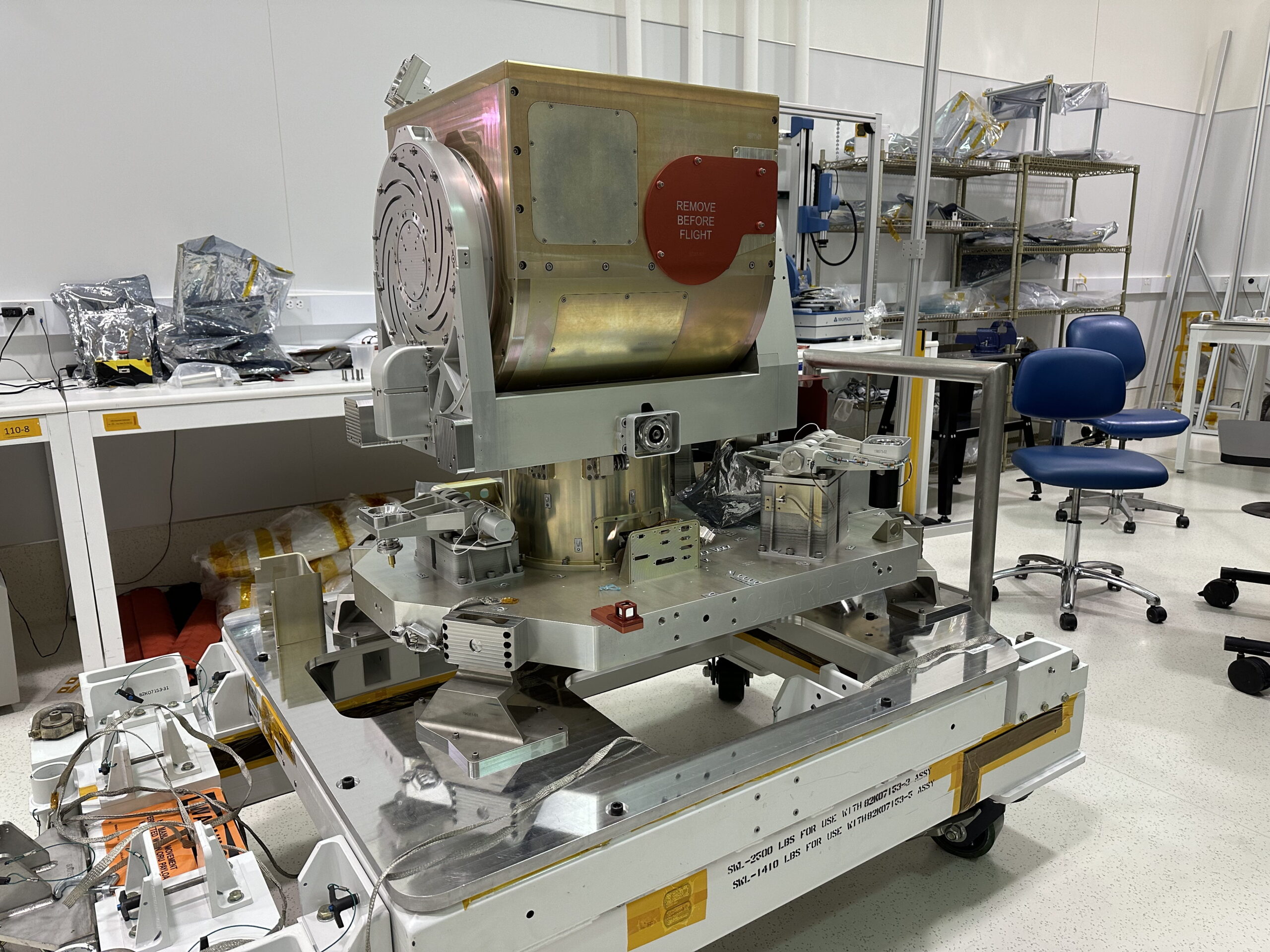
The CLARREO Pathfinder (CPF) payload has been integrated! All the pieces of CPF are now together, including the pointing system and heart of CPF, the HySICS instrument, which takes high-accuracy measurements of reflected sunlight. Coming up next are tests to demonstrate that the payload can withstand launch conditions and operate in the space environment while on the International Space Station.
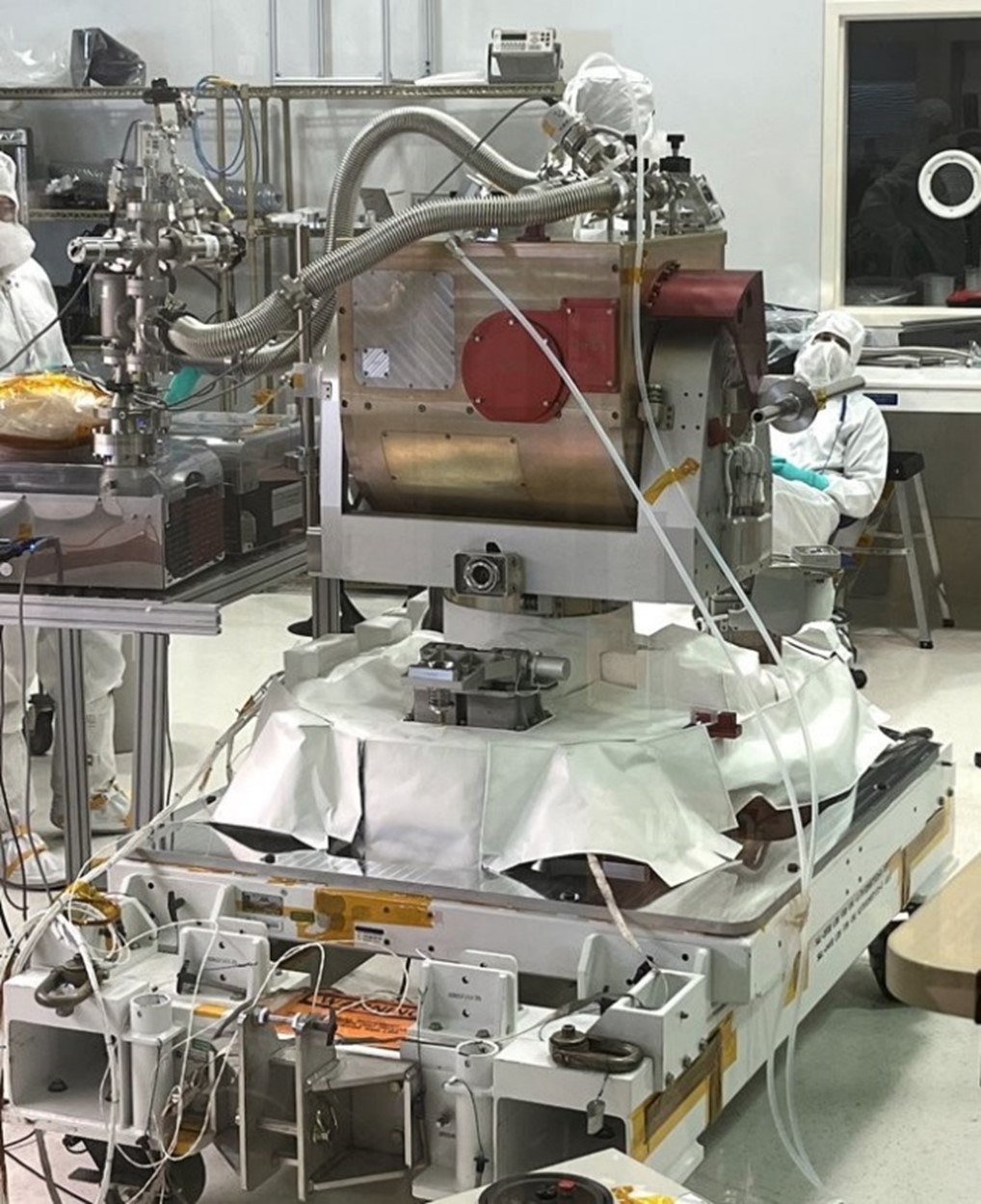
The CPF project conducted a successful payload-level Delta Pre-Environmental Review (PER). The payload is now ready to be shipped for environmental testing.
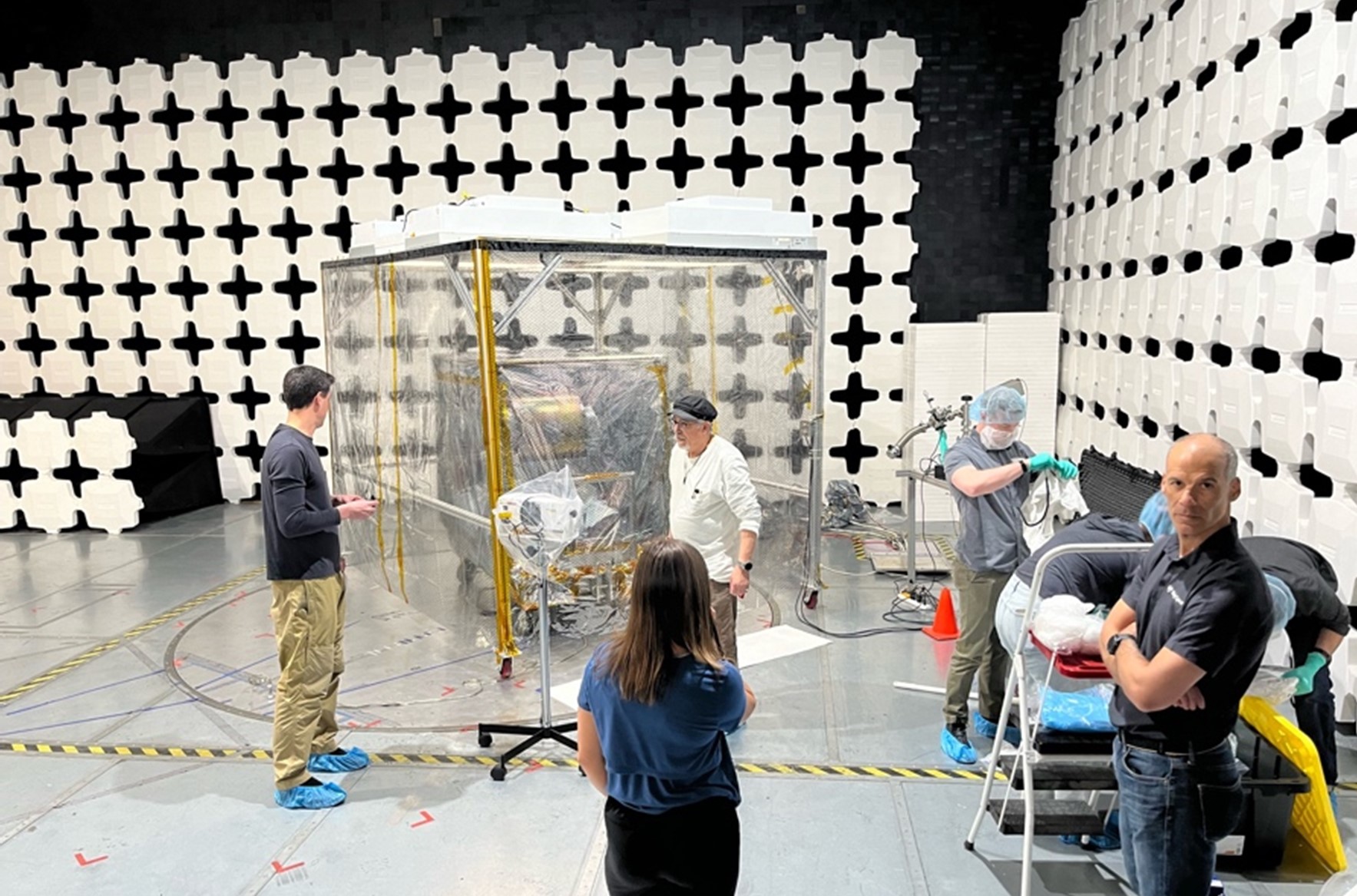
The payload is packed up and safely delivered to Element where it will undergo Electro-Magnetic Interference (EMI) testing. This is a series of tests that will assess the payload’s electromagnetic emissions that it gives off and how it will respond when exposed to electromagnetic inputs from a space-like environment.
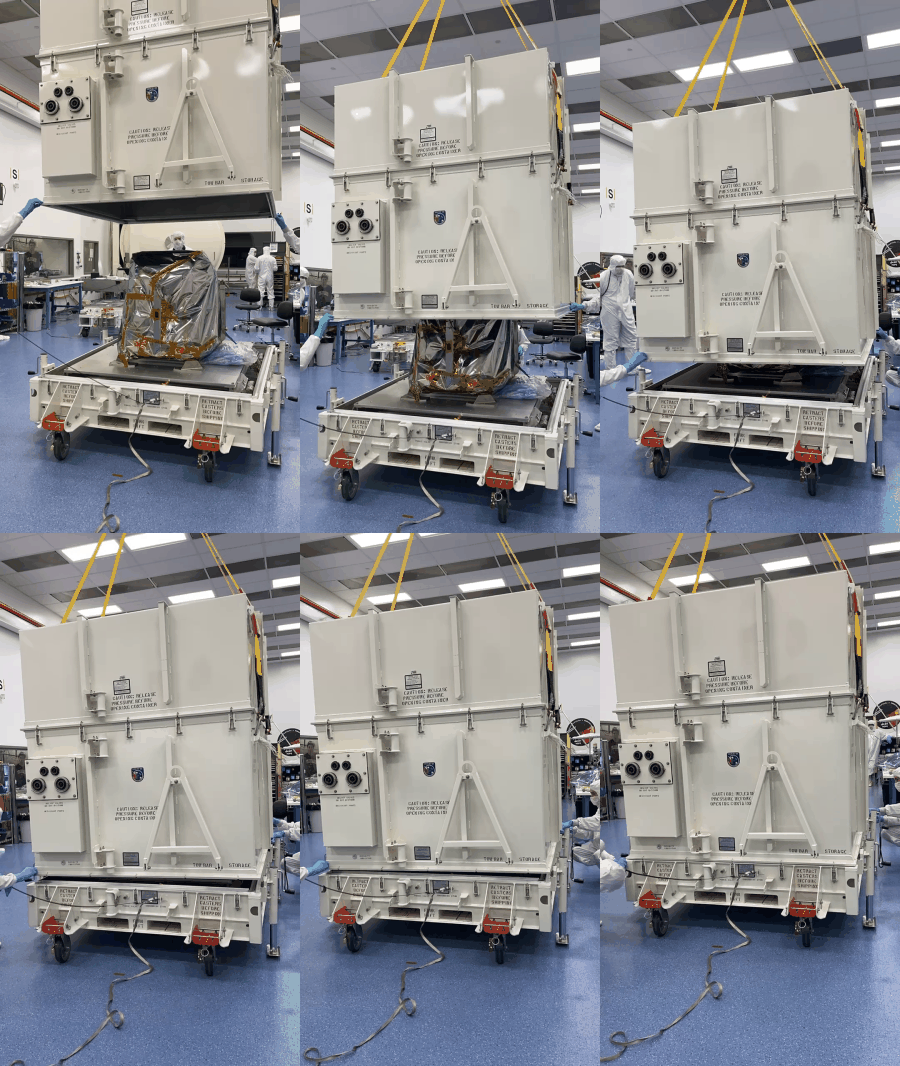
The CLARREO Pathfinder (CPF) team at Laboratory for Atmospheric and Space Physics (LASP) in Colorado is packing up and shipping out the CLARREO Pathfinder Reflected Solar (CPRS) payload to Experior Laboratories in Oxnard, California. There, the payload will undergo vibration testing to prove it can withstand launch conditions and operate in the unique space environment.
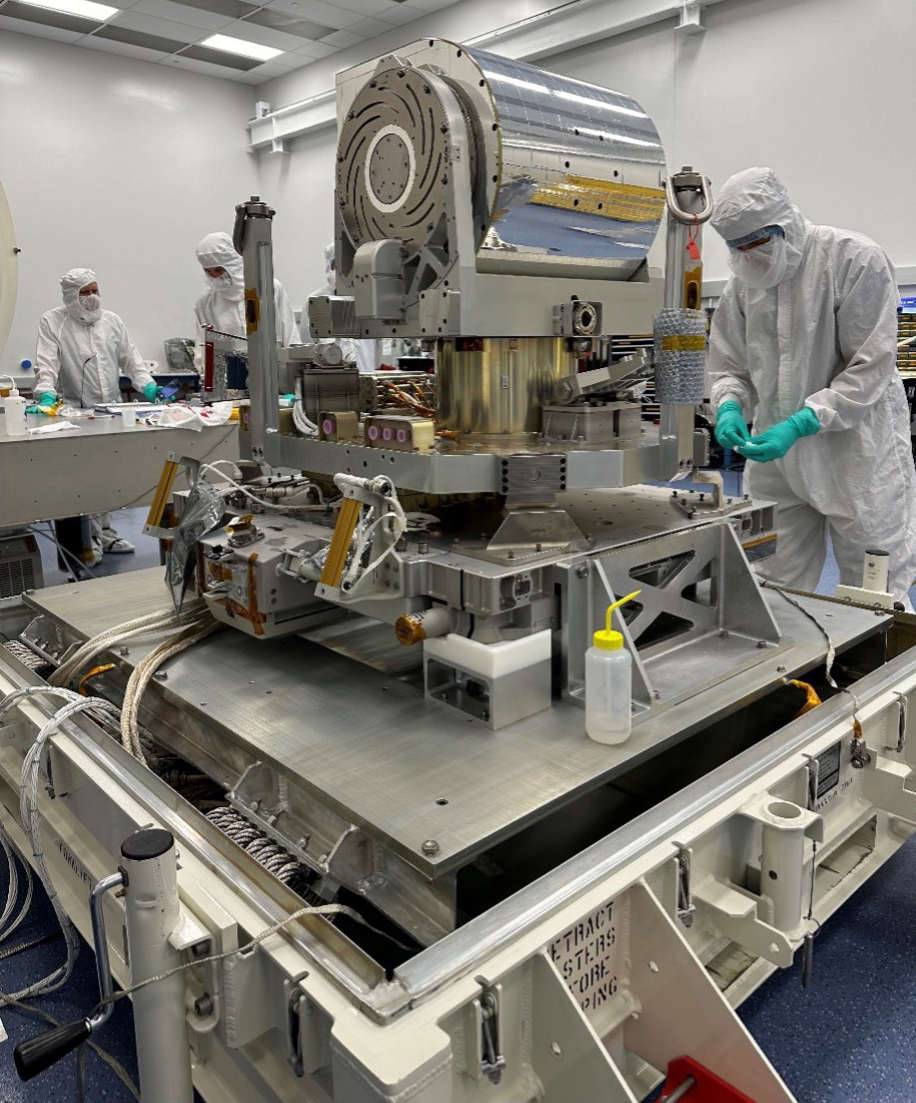
The payload-level thermal vacuum (TVAC) testing has been successfully completed, marking a significant milestone for the CLARREO Pathfinder (CPF) project. Successful TVAC testing gives the CPF team confidence that the payload can operate in space environment conditions while on the International Space Station (ISS). After removal from the TVAC chamber, the Laboratory for Atmospheric and Space Physics (LASP) team in Boulder, CO completed integration of the CPF payload, including the Langley-built Power Converter Unit (PCU) and all flight harnessing, with the ExPRESS Payload Adapter (ExPA). The ExPA is the interface mechanism used to attach the CPF payload to the ISS. Following integration, a variety of payload performance tests will be conducted in preparation for payload storage. Photo credit: LASP.
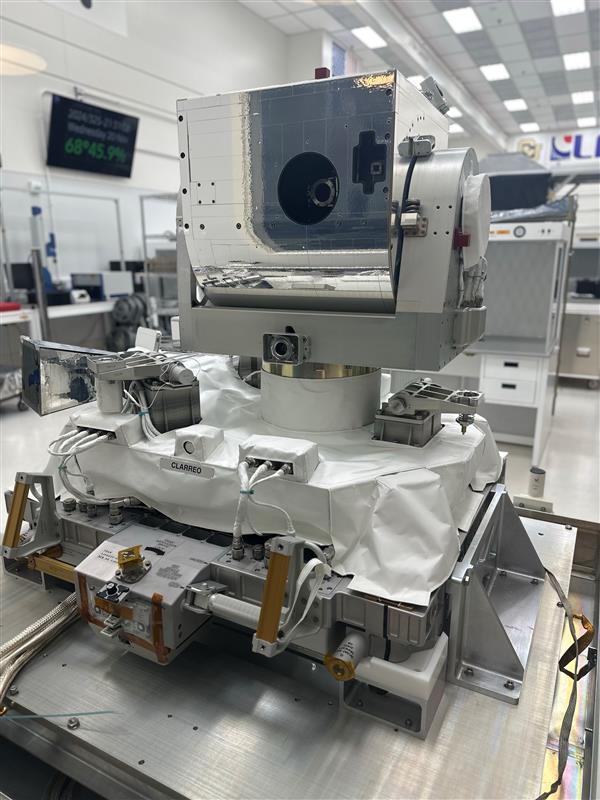
The CLARREO Pathfinder Payload Integration and Testing (I&T) is complete! Marking another significant milestone for the project, the fully-integrated payload has successfully undergone all post-environmental and pre-storage functional and performance testing at the Laboratory for Atmospheric and Space Physics (LASP) in Boulder, CO. The CPF payload is now prepared for storage at LASP, where it will wait for a future ride to the International Space Station. Photo credit: LASP